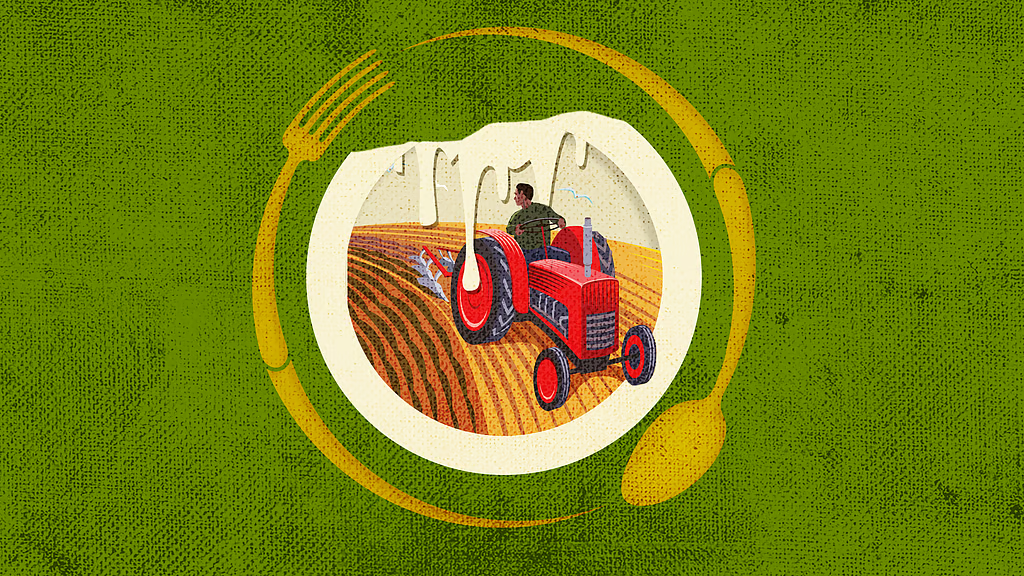
When we eat, we contribute to climate change. But food is also about livelihoods, about nutrition and about nature. That is the connection we need to make as the world begins to rework the paradigm of agriculture so that it is climate-smart and fit for purpose. What, then, are the elements of an agricultural model for livelihood-nutrition-nature security in our climate-risked world?
First, it must be low input so as to protect farmers from multiple risks. This will put more money in their hands, particularly as high cost of food is unaffordable for most countries. It is also clear that low-input agriculture is not necessarily less productive. The conventional strategy—even that promoted as smart agriculture—depends on high-quality, high-cost inputs that add to the cost of cultivation. The argument is that this will lead to higher yields, which will lift income. But this works only if the costs do not wipe out profits. In the case of smallholder farmers where the economy of scale is absent, this is just not possible.