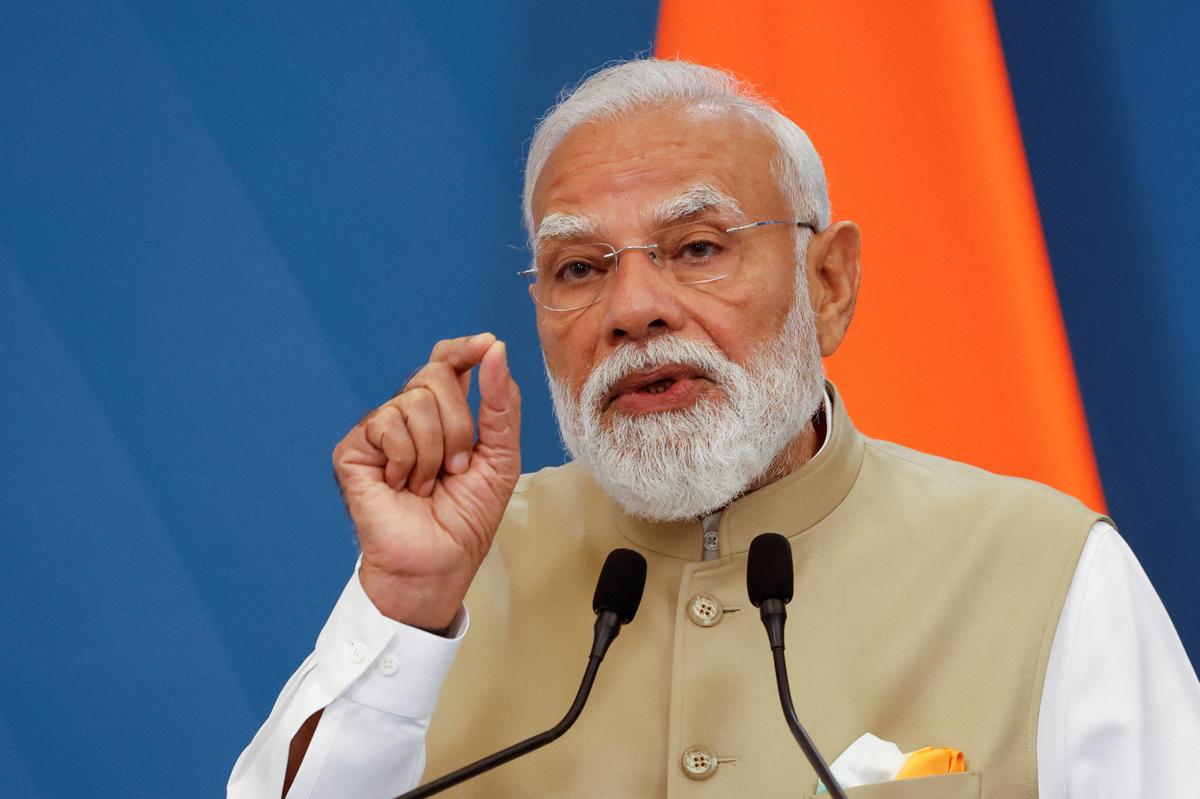
India and Japan are set to advance plans for a local-currency settlement framework that would allow direct yen-rupee transactions for bilateral trade, according to a Nikkei Asia report, as Prime Minister Narendra Modi prepares to host Japanese Prime Minister Sanae Takaichi in New Delhi this week.
The proposal is expected to be included in the joint statement after Modi and Takaichi meet for the 16th India-Japan Annual Summit, Nikkei reported. If included, it would be the first time currency cooperation is formally incorporated into a leaders’ joint statement between the two countries, according to the report.
Takaichi is scheduled to visit India from July 1 to 3 for the annual summit, her first official visit to India since taking office in late 2025. India’s Ministry of External Affairs has said the summit will allow both sides to review the full spectrum of bilateral cooperation and exchange views on regional and global issues of mutual interest. Reuters reported that the visit will focus on trade, investment and strategic cooperation.
Under the proposed framework, Japanese entities that are non-residents in India would be allowed to open accounts with Indian banks. This would enable financial institutions in both countries to settle cross-border payments directly in yen and rupees, without routing transactions through the US dollar, Nikkei reported.
The arrangement is intended to reduce foreign-exchange conversion costs, lower remittance charges and shorten settlement times by removing the need for correspondent banks in third countries, the report said.Japan’s Ministry of Finance is targeting the signing of a memorandum of cooperation with the Reserve Bank of India during fiscal 2026 to promote the use of local currencies in bilateral transactions, according to Nikkei.
The proposal builds on the Japan-India Joint Vision for the Next Decade adopted in 2025, which referred to payment-system cooperation, including local-currency transactions. The joint vision was issued after Modi’s visit to Tokyo for the 15th India-Japan Annual Summit in August 2025.
India has been widening the use of local-currency settlement in external trade. In July 2022, the RBI allowed invoicing, payment and settlement of international trade in Indian rupees through a special rupee vostro account framework. The Finance Ministry later told Parliament that the arrangement was meant to promote global trade with an emphasis on exports from India and support interest in the rupee.
The RBI’s updated FAQs describe rupee trade settlement as an additional arrangement to the existing system that uses freely convertible currencies, and say it would reduce dependence on hard currency. The central bank has also said exchange rates between the rupee and other foreign currencies under the mechanism would be market determined.
The framework has since been expanded. In August 2025, Reuters reported that the RBI allowed foreign entities maintaining special rupee vostro accounts to invest surplus balances in central government securities. Reuters also reported that RBI had approved 156 special rupee vostro accounts with 26 Indian banks for 123 correspondent banks from 30 trading partner countries, citing information given to Parliament.
Japan has used similar local-currency settlement arrangements in Asia. In December 2025, Reuters reported that Japan and Indonesia had signed a renewed and expanded memorandum of cooperation to encourage the use of local currencies in all bilateral transactions, building on a framework first signed in 2019.
The yen-rupee proposal comes as Japan seeks to deepen its economic engagement with India. Reuters reported that Japan had pledged during Modi’s 2025 Tokyo visit to more than double its investment in India to over $61 billion over the next decade. Bilateral trade reached $27.5 billion in FY26, while Japanese investment in India stood at $3.2 billion between April and December 2025, according to Indian government data cited by Reuters.
About 1,400 Japanese companies operate in India, nearly half of them in manufacturing, Reuters reported, citing an Indian source. The two leaders are also expected to attend business events with executives from both countries during the visit.
The summit agenda is also expected to cover defence cooperation, resilient supply chains, semiconductor manufacturing, artificial intelligence and automobiles. Reuters reported that the leaders are expected to discuss security cooperation and efforts to advance a free and open Indo-Pacific. India and Japan are members of the Quad grouping along with the United States and Australia.Japan remains one of India’s major investment partners, with involvement in infrastructure projects including the Mumbai-Ahmedabad high-speed rail corridor. Japanese firms have also stepped up investments in Indian companies, including a recent $1.6 billion deal for a 20 percent stake in Yes Bank, Reuters reported.