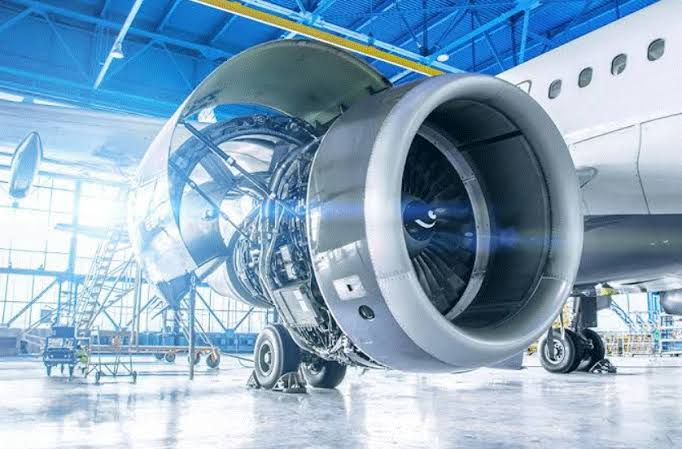
In a conversation with ETManufacturing, Gautam Maini, Managing Director of the Engineering Business at Raymond Limited spells out the reasons that make India a desirable place for aerospace component manufacturing and how on-time delivery matters more than the cost advantage.
India buys about one in every seven aircraft sold in the world, yet makes barely 1 per cent of the parts that go into them. It is the most-quoted number in Indian aerospace. Read one way, it shows how far the country still is from the global supply chain. Read another, it simply shows how big the opening now is. Gautam Maini, Managing Director of the Engineering Business at Raymond Limited, takes the second view, but he is careful about the reason, and that is the interesting part.It is easy, in a moment when Boeing and Airbus have sharply raised their buying from India and engine makers talk of scaling it several times over, to give all the credit to “China-plus-one” – the global rush to reduce dependence on China. Maini does not agree here. India, he says, was already becoming a serious place to manufacture, and the world’s search for a second option only sped up something that had begun on its own.China plus one is the cream,” he says. “But the basics in India are absolutely on target.” The difference matters, because it changes what a supplier should focus on.
For years, an Indian aerospace shop won work mainly by being cheaper. The enquiry came with an unspoken rule – be 20 per cent below the current supplier, and only then will we talk. That test no longer holds. When the pandemic choked the supply chains of the US and Europe, costs went up, skilled people became hard to find, and deliveries slipped.
Delivery matters more than price
What global companies now want from India is not the lowest price but the part that actually arrives, on time, done right. “In the end, if they don’t deliver their part, the aircraft doesn’t go out,” Maini says. “The root cause of the problem is not as much price as it is delivery, and on-time delivery with high quality.” The supplier who can be trusted now wins even when the price gap is small, because being reliable has become a rare thing.That shift, from being cheap to being dependable, runs through everything he says about how a company grows here. Aerospace is a high-mix, low-volume game. You cannot grow on a handful of parts; you grow by making a wide range of them, for many customers, and adding to that list all the time.
Raymond’s aerospace arm now makes more than 1,350 different parts and adds a new one almost every working day – over 350 on the LEAP engine alone, cut from tough metals like titanium and superalloys where there is no room for error. The company took the hard road in, starting with engine parts rather than the easier world of structures, and twenty years of doing the difficult thing is now its biggest strength. The market is not the problem; there is an eight-to-ten-year order backlog. The real test is delivery. When a weaker supplier slips, the orders move to whoever can deliver.His plan to close the 1 per cent gap faster rests on one simple idea: Stop treating civil and defence work as separate. The machines and special processes that take a supplier up the ladder are costly, and it is hard to earn them back on small volumes alone. But the difference between a part for a civilian plane and a similar one for a defence platform is often small in technology and huge in volume. Combine the two, and the large civil orders build the cost and quality base on which India’s defence programmes can grow faster and cheaper. The right offset and technology-transfer policies, he adds, will help push this along.
Materials are the next step, what he calls phase two. Today, much of the raw material, castings and forgings still come from abroad. Over the next two to five years he expects a lot of that to be made in India, as global buyers, big suppliers and firms like his own all push in the same direction. Once that happens, he says, India becomes very hard to beat. The catch for small firms is patience, a new customer can take up to two years to approve you, and most want a supplier who can handle everything end to end, not just one step.None of this is only talk for Raymond. Its aerospace revenue grew 40 per cent in the June quarter, against a promise of 25 per cent. The group has committed around ₹940 crore to two new campuses in Andhra Pradesh, about 47 acres for aerospace and 30 for automotive, an hour and a half from Bengaluru airport, with production due to start in late 2027. The aerospace plant is being built to bring processes like heat treatment and surface treatment in-house, so customers get a faster, one-stop service. Raymond has also won its first orders on a “design-to-build” programme, the level above simply making to a customer’s drawing, where the supplier starts to own the design itself. That is the point where “Make in India” begins to mean something closer to “designed in India.”
Ask him where the country stands, and Maini does not hedge. The turning point, he says, is 12 to 20 months away; after that, growth becomes very fast. Some of the programmes he is discussing today will only start in 2030, which is exactly why patience is not sitting still, but getting ready years before the work arrives. And if he is right, the gap between the aircraft India buys and the ones it helps build is about to start closing for real, not because the world went looking for a backup, but because India, quietly and on its own terms, finally became a serious choice.