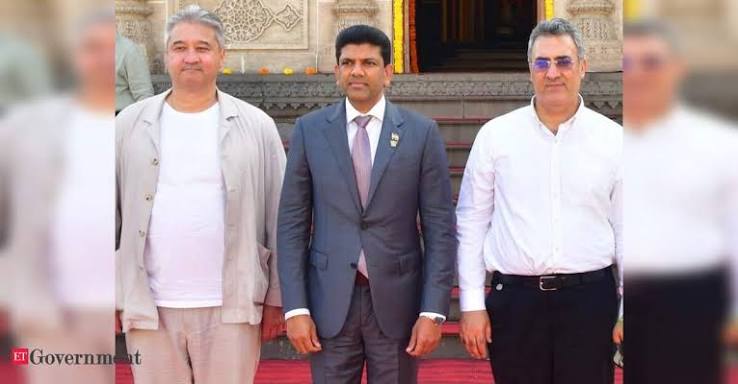
BRICS brings together 11 major emerging markets and developing countries—Brazil, China, Egypt, Ethiopia, India, Indonesia, Iran, Russia, Saudi Arabia, South Africa and the United Arab Emirates. Collectively, these countries represent diverse civilisations, cultures and economic systems, giving the grouping a scope that extends beyond economic and strategic cooperation.
Under India’s BRICS chairmanship in 2026, engagements among member countries are focusing on socio-economic development, technology, sustainability, trade and other areas of common interest. At the same time, India is using the presidency to introduce visiting delegations to the country’s cultural and historical heritage, adding a dimension of civilisational diplomacy to BRICS’ broader people-to-people engagement.This combination of technology and cultural diplomacy was visible at the 12th BRICS Communications Ministers Meeting, chaired by Union Communications Minister Jyotiraditya M. Scindia in Pune on August 21. Maharashtra’s cultural capital, Pune combines a rich historical legacy with a growing technology and digital ecosystem, providing an appropriate setting for discussions on the future of communications and digital infrastructure.
The city is also associated with Maharaja Mahadji Scindia, one of the most influential political and military figures of 18th-century India and an ancestor of Jyotiraditya Scindia. British historian Henry George Keene described Mahadji Scindia as one of the greatest warriors of 18th-century Asia.
The BRICS ICT Track
As part of India’s BRICS presidency, the Department of Telecommunications organised the BRICS ICT Track in Pune from August 17 to 21 around the theme, “Innovate, Cooperate and Transform (ICT) for a Resilient Future.”
The engagement began with the 7th BRICS ICT Working Group Meeting from August 17 to 19. Delegates discussed the development of ICT ecosystems capable of delivering universal, meaningful, affordable, sustainable and resilient connectivity. Other priorities included trusted and secure digital environments, digital skills and capacity building, and support for innovation, startups and entrepreneurship.
The discussions covered several technologies and policy areas that are increasingly shaping the global digital landscape, including artificial intelligence, next-generation communication networks, digital public infrastructure,
cybersecurity and child online protection.
On August 20, India hosted the Digital BRICS Forum and Expo, providing a platform for policy dialogue and demonstrations of emerging digital technologies. The forum featured thematic discussions on cybersecurity and trustworthy ICT systems, child online protection, and the development of sustainable and resilient digital ecosystems.
The ICT Track culminated in the 12th BRICS Communications Ministers Meeting on August 21, bringing together communications ministers and senior representatives of member countries. Discussions focused on strengthening cooperation in ICT, digital transformation, emerging technologies and resilient digital infrastructure.
Welcoming the delegates in English and Marathi, Scindia outlined India’s vision of a digital future built around resilience, trust, innovation, empowerment and inclusion. He highlighted India’s efforts to bridge the digital divide, expand connectivity, build capacity and enable sustainable digital transformation.
The meeting also provided BRICS members with an opportunity to exchange perspectives on emerging technologies, digital public infrastructure, future communication networks, cybersecurity, capacity building and inclusive connectivity. A significant focus was on practical cooperation and the exchange of best practices that could support digital transformation not only within BRICS but also across the wider Global South.
India’s Digital Public Infrastructure model has emerged as an important element of these discussions. Its emphasis on scalable, interoperable and population-scale digital systems has increasingly become part of international conversations on digital transformation and public-service delivery.
Cultural Diplomacy at Mahadji Scindia’s Chhatri
The BRICS programme in Pune extended beyond conference rooms. Delegates were also introduced to the city’s historical and cultural heritage, including a visit to the cenotaph, or Chhatri, of Maharaja Mahadji Scindia at Wanawadi.