India has made substantial progress in its power generation capacity addition, especially aided by healthy growth in RE capacity, driven by strong policy support and climate commitments. The momentum is expected to continue, with most incremental demand being met through RE additions.
India’s energy infrastructure has been critical for its economic development, with electricity demand closely tracking real gross domestic product (GDP) growth. From FY2015 to FY2025, both indicators have shown a consistent upward trend – excluding the pandemic period – with electricity demand growing at a 10-year compound annual growth rate (CAGR) of 4.7 per cent and GDP at 6.0 per cent.However, the linkage between these two is also influenced by other factors such as monsoons, and hence, there was an aberration in FY2026, wherein elongated and early monsoons moderated the power demand growth materially to less than 1 per cent. ICRA expects annual electricity demand growth of ~6.5 per cent for FY2027 and the same is likely to grow at 5-6 per cent in the medium term, closely tracking India’s projected GDP growth of 6.0–7.0 per cent. The demand growth will also be driven by emerging sectors like electric vehicles (EVs), data centres (DCs) and Green Hydrogen (GH).The peak electricity demand—representing the highest instantaneous load—has risen from 160 GW in FY2017 to around 270 GW in FY2027 till date, a CAGR of around 5.5 per cent. It is expected to cross 400 GW by 2030. Despite these gains, India’s per-capita electricity consumption remains significantly below that of developed nations like the US, Japan, China, the UK and Germany, and even lags emerging economies such as Brazil and South Africa. The global average stands at 2.5–3 times India’s current level. As urbanisation and industrialisation continue, per-capita electricity demand is expected to rise. This growth necessitates sustained investment in generation capacity.India has made substantial progress in its power generation capacity addition, especially aided by healthy growth in renewable energy (RE) capacity, driven by strong policy support and climate commitments. This momentum is expected to continue, with most incremental demand being met through RE additions. While over the last few years, this was largely driven by plain vanilla solar and wind deployments, the trend is incrementally shifting towards more firm and dispatchable and round-the-clock solutions through RE sources to match the demand patterns of the consumers.
The power generation capacity, which stood at 270 GW in 2015, has witnessed a healthy growth and stood at more than 550 GW as of July 2026, largely driven by expansion in the RE capacity which increased from around 40 GW to 240 GW (excluding large hydro) over the same period, with record addition of more than 50 GW in FY2026 itself. In terms of generation mix, ICRA estimates the share of generation from renewable energy (RE) capacity, including large hydro, to cross 35 per cent by 2029-2030 from 22 per cent in 2024-2025, while the share of coal-based power is likely to come down to below 60 per cent by 2030.The bidding activity in RE space has witnessed a slowdown amid challenges in the signing of power purchase agreements (PPA) and power sale agreements (PSA), as well as delays in ramp-up of the transmission capacity. However, the renewable power pipeline remains healthy with more than 150 GW of projects under construction as on June 30, 2026, which are likely to drive the capacity additions over the near-to-medium term.
Following the award of a sizeable RE capacity of 40.6 GW in 2024-2025, the bidding activity slumped, with only 14.7 GW capacity awarded in 2025-2026. The subdued trend has continued in the current year, with 4.7 GW awarded till August 10, 2026. Further, the unsigned PPA capacity remained sizeable at 40-45 GW as of April 2026.
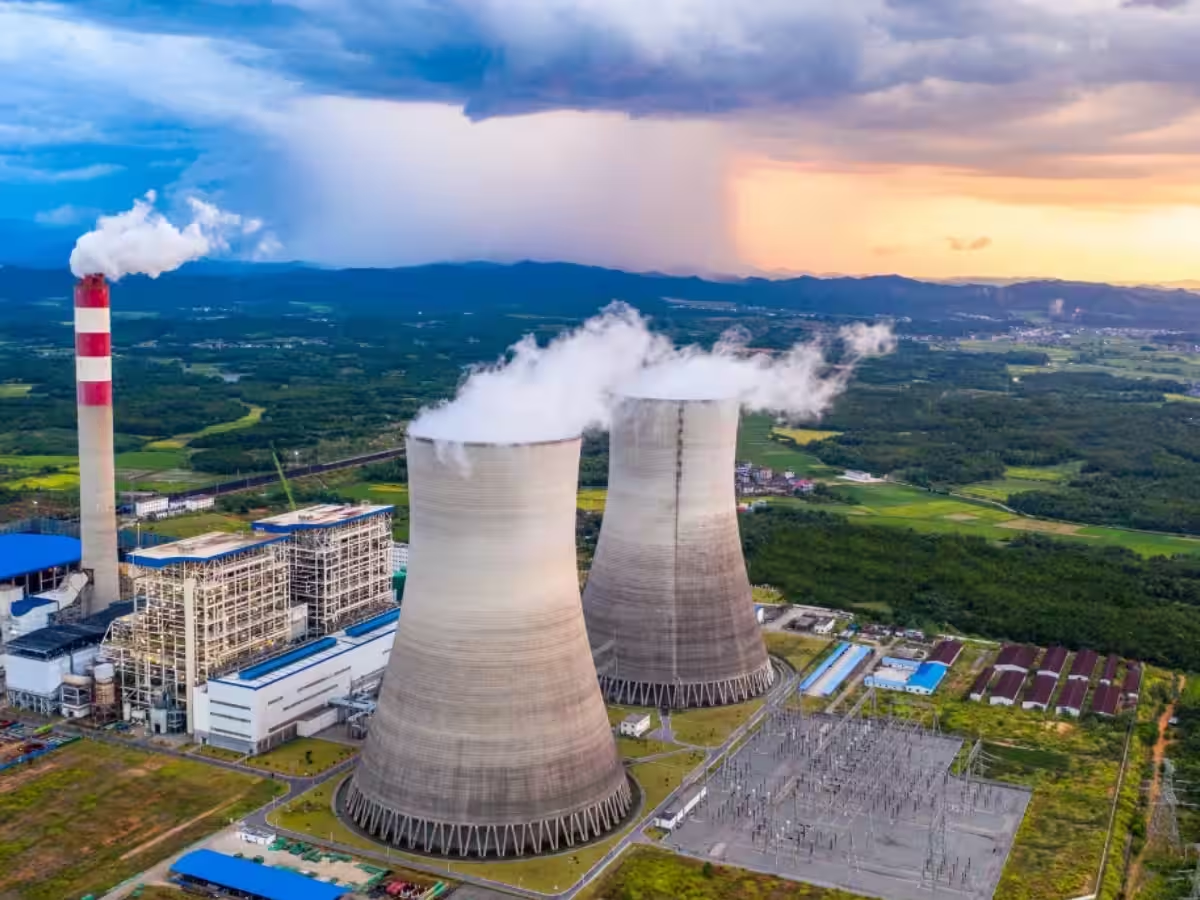
On the other hand, the thermal power sector in India is witnessing a revived investment emphasis, even as the renewable capacity continues to expand at a rapid pace. Thermal power acts as a reliable base-load supply, aiding grid stability, amid expectations of power demand growth.
ICRA anticipates that the thermal power segment will add around 6 GW of capacity in FY2027, with estimated plant load factor (PLF) levels of 66-68 per cent. Over the medium term, ICRA expects capacity addition of 50-60 GW till 2032 in the thermal power space.Grid and storage readiness
The sizeable capacity addition has exerted pressure on the grid as the transmission infrastructure development has not been able to keep pace with the generation capacity addition. This has caused issues pertaining to curtailments, especially for projects running on temporary general network access (T-GNA), mainly in congested areas of Rajasthan and Gujarat.
Out of the impacted substations, with capacity of more than 50 GW, around 37 per cent of the capacity in North, West and South operates under T-GNA and faces curtailment of 50-60 per cent during peak solar hours. Hence, timely execution of intra-state and inter-state transmission infrastructure and enhancement of storage capacity will be critical to protecting project economics and sustaining the pace of capacity addition as the share of renewables in the generation mix ramps up.The Green Energy Corridor (GEC) programme is aimed at strengthening the intra-state transmission infrastructure to enable evacuation and integration of rapidly growing renewable energy capacity. The proposed GEC-III targets integration of nearly 135 GW of renewable capacity across 13 states, through approximately 51,000 circuit km of transmission lines, with a capex of ₹56,000 crore, of which 40 per cent Central Financial Assistance is envisaged. GEC-III is also planned to facilitate integration of 25.2 GW of pumped-storage projects and 44.8 GWh of battery storage, making it an important part of the grid infrastructure required to support India’s next phase of renewable capacity expansion.
Further, in order to mitigate the curtailment risks, developers are installing the battery portion of their firm and dispatchable renewable energy (FDRE) projects upfront to benefit from the arbitrage available in the power prices during peak hours. In terms of tendering, the project configurations and tender conditions have witnessed a lot of changes to match the needs of the end customers (state discoms). Just to cite an example of a latest tender, the power delivery requirements mimic thermal power and are based on specified demand fulfilment ratios during peak and off-peak hours.
Thus, there has been a strong emphasis on storage capacity addition. As of June 2026, around 8.5 GWh of battery energy storage system (BESS) projects were operational, with 80 GWh of projects under development and another 70 GWh under various stages of tendering.
There has been an increased tendering activity in the standalone BESS projects, which have also witnessed significant price competition, with tariffs being quoted as low as ₹1.5 lakh/MW/month with viability gap funding. These low tariffs appear to be extremely aggressive with challenges in terms of viability of these projects, given that there has been an uptrend in the imported battery pack prices of late.
Overall, the power sector is slated to witness a significant capital expenditure estimated at ₹29-30 lakh crore over the next five to six years for capacity addition in renewable and non-renewable generation, as well as for strengthening of transmission & distribution network, along with storage capacity.This translates to an annual investment run rate of ₹5-6 lakh crore over the next five to six years. Out of this total estimated investment, ₹18 lakh crore is expected to be towards power generation (renewable + non-renewable) segment, ₹5 lakh crore towards the transmission sector, ₹3 lakh crore in the distribution sector and ₹3 lakh crore in towards storage capacity addition over the next five to six years.