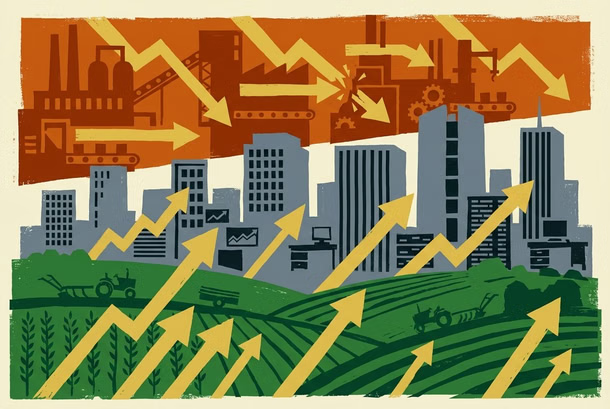
- It’s not an output problem but a price effect. Agriculture’s subsidised growth and services’ regulatory ease have pushed manufacturing into relative decline, making reform urgent.
The constant criticism one hears about Indian manufacturing is that despite policy initiatives, the much-touted goal of raising its share in GDP to 25 per cent is as far from reality as it ever was. The question is why is this not happening? Manufacturing’s share in GDP even seems to be slipping, sometimes even falling below that of agriculture.
The Economic Survey 2025-26 gives us both an explanation for why this is so and what the real challenges are. It gives us three reasons why manufacturing is still on a slippery slope (oversimplified here to give readers a snapshot): one, the excess political attention given to agriculture makes its terms of trade vis-à-vis manufacturing better; two, the relatively easy regulatory environment for services makes entrepreneurs gravitate more towards that sector; and three, inverted duty structures make domestic manufacturing less competitive with imports. The survey adds that manufacturing’s share has not fallen in constant price terms, just in relative terms.
Says the Survey: “Regarding industry, a concern is often raised about its declining share in GVA (gross value added). The compression in manufacturing’s GVA share stems from relative price effects rather than reflecting a decline in manufacturing activities…and higher intermediate consumption, which reduces net value added relative to sectors with greater pricing power, particularly services. In real (constant) price terms, manufacturing’s share has remained steady at around 17-18 per cent. Manufacturing’s gross value of output (GVO) has remained broadly stable at around 38 percent, comparable to services, indicating that output has been sustained.”
In short, the relative decline in manufacturing’s share of GDP is not the result of any actual decline in manufacturing growth or output, but relatively higher growth in agriculture and services. The former is driven by state mollycoddling of the farm sector, the latter benefits from having to deal with far less regulatory cholesterol than manufacturing.