India’s visionary leadership and transformative reforms in Ladakh’s tourism sector have sparked a renewed sense of hope and optimism among industry leaders and local stakeholders. With bold policy changes, strategic collaborations, and a focused approach to sustainable growth, the government is laying the groundwork for an unprecedented tourism revival in 2026. These efforts aim to rebuild Ladakh’s tourism infrastructure, promote the region’s unique cultural and natural heritage, and create lasting economic opportunities for local communities. The combination of government support, targeted promotional campaigns, and the commitment of key tourism associations promises to drive a prosperous future for the region’s tourism industry.
Tourism leaders in Ladakh have expressed high hopes for a successful and prosperous tourism season in 2026, crediting the Tourism Department for its ongoing strategic initiatives in branding, promotion, and policy reforms. With these concerted efforts, the tourism community in Ladakh is optimistic about a revitalization of the sector, with a renewed focus on sustainable and inclusive growth. The combined efforts of the Tourism Department, hotel associations, and tour operators are seen as key to overcoming the challenges faced by the region’s tourism industry in recent years.
The tourism sector in Ladakh has long been a significant contributor to the region’s economy, but in the wake of recent setbacks, industry leaders are determined to rebuild and ensure the sector’s long-term sustainability. The strong partnership between the government and local stakeholders, coupled with the government’s willingness to listen to the needs of the tourism community, has fostered an environment of hope for the future.
Government’s Proactive Approach Inspires Confidence
One of the primary reasons for optimism among tourism leaders is the proactive approach adopted by the government in addressing the challenges faced by the tourism industry. The Tourism Department has made it a priority to advance Ladakh’s tourism branding and promotion at the national and international levels. This forward-thinking approach is seen as essential for reigniting interest in the region and drawing tourists back to Ladakh in 2026 and beyond.
Industry representatives have acknowledged the significant strides made by the government in improving coordination and introducing vital policy reforms. This demonstrates the administration’s willingness to collaborate with key stakeholders, paving the way for more focused promotional campaigns and targeted strategies aimed at rebuilding the tourism infrastructure.
Collaboration for Sustainable Growth
A central theme in the discussions surrounding Ladakh’s tourism recovery is the commitment of local tourism associations to work hand-in-hand with the government. The All Ladakh Hotel & Guest House Association (ALHAGHA) and the All Ladakh Adventure & Tour Operators Association (ALATOA) have reiterated their pledge to collaborate with the administration to ensure the sustainable, responsible, and inclusive growth of tourism in the region.
Ladakh’s tourism sector, which has faced considerable challenges in recent years, is now gearing up for recovery. Stakeholders from both associations are eager to ensure that the growth of tourism is managed in a way that benefits not just tourists but also the local communities. Through sustainable tourism practices, they aim to create a win-win situation for the local economy and residents, ensuring that tourism supports job creation, infrastructure development, and the preservation of the region’s unique cultural heritage.
The Impact of Recent Setbacks
Despite the optimism, Ladakh’s tourism industry has had its share of challenges, the most significant being the Pahalgam terror attack in April 2025. This attack led to a sharp decline in tourist arrivals, dampening the enthusiasm of tourists and creating uncertainty in the sector. The situation worsened in September 2025, when violent events in Leh further exacerbated the negative impact on the tourism sector. Hotels, guesthouses, and tour operators faced considerable financial setbacks, with many reporting significant losses during this period.
However, these challenges have not deterred tourism leaders in Ladakh. Instead, the adversity faced by the sector has sparked a renewed sense of determination to revive and strengthen the region’s tourism industry. Tourism stakeholders have worked together to formulate strategies for overcoming these difficulties and ensuring that Ladakh remains a top destination for travelers from around the world.
Key Stakeholders in the Tourism Recovery Effort
In a recent meeting, key figures from the ALHAGHA and ALATOA associations, including President Rigzin Wangmo Lachic, ALATOA General Secretary Tsewang Namgyal, and ALHAGHA Vice President Nawang Tashi, came together with senior officials from the Tourism Department to discuss the way forward for Ladakh’s tourism sector. The meeting, attended by Tourism Secretary Sanjit Rodrigues, Director of Tourism Tsering Paldan, and Additional Director of Tourism Leh Padma Angmo, provided an opportunity for stakeholders to express their gratitude for the department’s continued support and engagement.
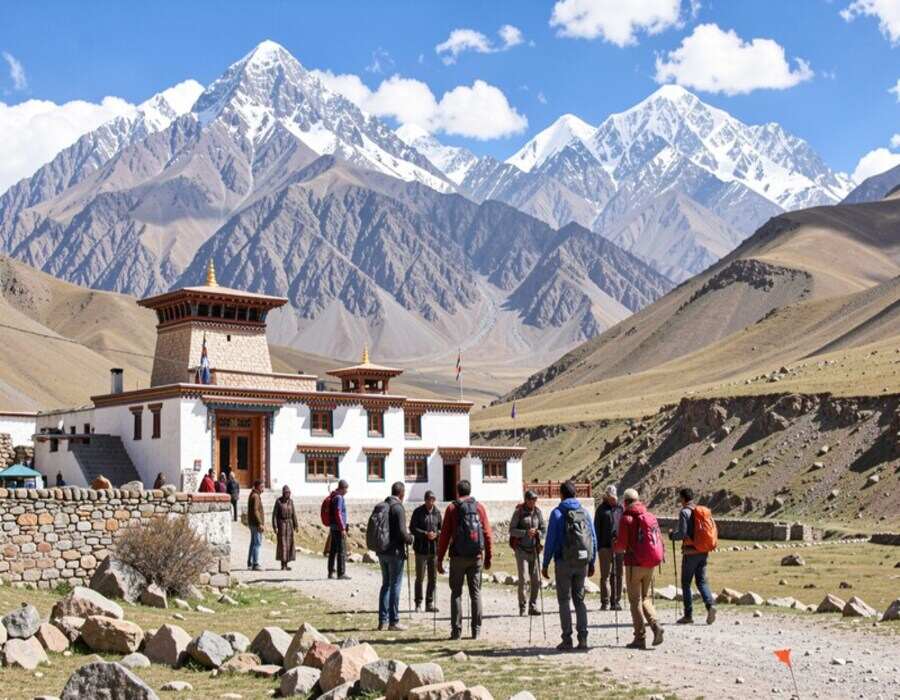
During the meeting, both associations emphasized the importance of a collaborative approach to tourism recovery. Stakeholders highlighted the department’s efforts to focus on targeted promotional campaigns that appeal to a diverse range of travelers, including adventure tourists, nature enthusiasts, and those seeking cultural experiences. These initiatives are seen as key to ensuring a successful and sustainable recovery for Ladakh’s tourism industry in 2026.
Focus on Targeted Promotion and Policy Reforms
A significant area of focus for the Tourism Department has been the introduction of targeted promotional strategies aimed at attracting both domestic and international tourists. The department has also been working on strengthening its coordination with travel agencies, tour operators, and hoteliers to ensure a seamless experience for visitors. By investing in better coordination and policy reforms, the government is working to create a more attractive and accessible destination for travelers.
The ongoing reforms are seen as crucial for restoring confidence in the sector, with many stakeholders noting that these efforts have already had a positive impact on the ground. Improved infrastructure, better facilities, and a more customer-friendly approach are expected to make Ladakh a more appealing destination for tourists in the coming years.
A Bright Future for Ladakh’s Tourism
With continued support from the Tourism Department and the active involvement of local stakeholders, there is a growing sense of hope within the Ladakh tourism industry. The region is poised for a strong recovery in 2026, with stakeholders committed to ensuring that tourism growth is both sustainable and responsible. As the region works to overcome the challenges of the past, there is a shared vision of a tourism sector that not only provides economic benefits but also contributes to the well-being of local communities and preserves the natural and cultural beauty of Ladakh for future generations.
India’s bold reforms and strategic collaborations are igniting new hope for Ladakh’s tourism, paving the way for unprecedented growth and success in 2026. With a focus on sustainable development and enhanced promotional efforts, the region is poised for a thriving future.
Key Takeaways:
- Proactive Government Efforts: The government’s active engagement and policy reforms are essential for the recovery of Ladakh’s tourism sector.
- Collaborative Approach: Tourism associations like ALHAGHA and ALATOA are working closely with the government to ensure sustainable growth.
- Challenges Overcome: Despite the setbacks from the Pahalgam terror attack and violent events in Leh, the tourism sector remains resilient.
- Focused Promotional Strategies: Targeted campaigns are being implemented to attract diverse groups of tourists, ensuring a strong recovery.
- A Sustainable Future: The focus on responsible and inclusive growth will benefit both the tourism sector and local communities in Ladakh.
As tourism stakeholders in Ladakh look ahead to 2026, there is a collective belief that the region’s tourism industry will not only recover but also thrive, bringing new opportunities for both visitors and residents alike.