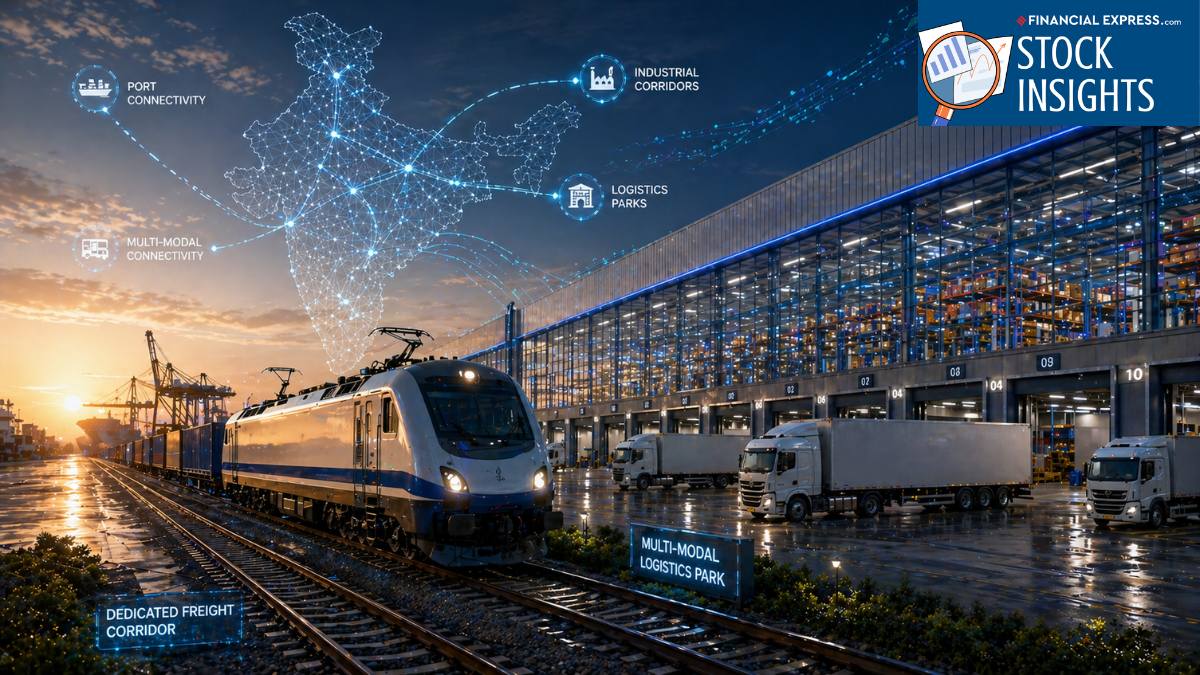
India’s infrastructure buildout is entering a different phase. At the centre of this shift is the PM GatiShakti National Master Plan, launched on 13 October 2021. The ₹100 lakh crore digital initiative aims to transform how the country plans and connects its infrastructure.
The plan brings together seven key sectors: Railways, Roads, Ports, Waterways, Airports, Mass Transport, and Logistics Infrastructure onto an integrated platform. This alignment is expected to improve connectivity, reduce logistics costs, and remove long-standing inefficiencies that have held back supply chain performance.
The intent goes beyond just building assets. The initiative aims to foster value addition while lowering overall costs across the logistics ecosystem. At the same time, execution on the ground is beginning to reflect this shift.
The development of high-speed, large-capacity Dedicated Freight Corridors (DFCs) is expected to streamline freight movement and improve reliability. As these corridors expand, they are also likely to drive the creation of new industrial hubs and Gati Shakti Cargo Terminals.
1 Gateway Distriparks
Gateway Distriparks (GDL) is a leading integrated inter-modal logistics service provider in India. Together with its subsidiary, Snowman Logistics, the group provides a vast, end-to-end supply chain network that directly aligns with and supports the PM GatiShakti National Master Plan.
Why GDL’s 15-Year Ankleshwar Pact is a Moat, Not Just a Contract
GDL operates an asset-light business model focusing primarily on Inland Container Depots (ICDs) and Container Freight Stations (CFS). It operates a network of 10 owned container terminals located across India, including 5 ICDs (Garhi Harsaru, Faridabad, Ludhiana, Kashipur, and Viramgam) and 5 CFSs (Nhava Sheva, Chennai, Visakhapatnam, Krishnapatnam, and Kochi)
Gati Shakti Integration: Driving Efficiency via Multi-Modal Logistics
GDL’s strategic operations and expansions directly support Gati Shakti goals in several key ways. The government’s push for Multi-Modal Logistics Parks is a core component of the GatiShakti framework. This is designed to reduce freight costs and vehicle congestion by smoothly integrating various modes of transport.
In a major move supporting this policy, GDL signed an exclusive 15-year agreement in August 2025 to operate container train services at the 120-acre MMLP New Ankleshwar in Gujarat. This asset-light facility handles both EXIM (Export-Import) and domestic containers. Domestic services started in Q3FY26, while the EXIM operations are scheduled to begin in early FY27.
Western DFC Connectivity: Unlocking Industrial Hubs via New Ankleshwar
This train service directly links to the Western Dedicated Freight Corridor, improving logistics for surrounding industrial hubs like Bharuch, Dahej, and Hazira. GDL’s rail-linked Inland Container Depots are strategically aligned with the Western Dedicated Freight Corridor.
Additionally, the company recently acquired approximately 25 acres of land to build a new inland container depot near Pithampur, Indore. With an estimated capital expenditure of ₹150 crore, the facility will have a planned capacity of 120,000 twenty-foot equivalent units (TEUs) per year. This facility is expected to be fully operational within the next two years.
Fleet Modernization & Financial Performance: Scaling for FY2026-27 Growth
Looking ahead, to handle anticipated volume growth, the company is expanding its rail fleet. GDL will increase its total fleet to 37 rakes by May/June 2026. This involves purchasing 3 new high-capacity, high-speed rakes (to be delivered by May 2026) and swapping out 3 older leased models for newer high-capacity ones by 31 March 2026.
From a financial perspective, revenue grew by 46% year-on-year to ₹1,691 crore in 9MFY26. EBITDA (Earnings Before Interest, Tax, Depreciation, and Amortisation) grew by 28% to ₹375 crore, while margins fell by 300 basis points to 22.2%. Net profit surged by 13% to ₹196 crore.
#2 TCI Express
TCI Express operates as a leading business-to-business (B2B) express cargo delivery company in India. It’s a multimodal logistics ecosystem, encompassing surface, air, and rail transportation, to provide time-definite delivery solutions.
Asset-Light Efficiency: Maintaining a Debt-Free Balance Sheet
TCI’s business model is asset-light, allowing the company to maintain high network utilization, strict cost discipline, and the flexibility to scale capacity. To maintain operational control and consistent service standards, TCI relies on a 100% company-owned network. This model supports a highly profitable, debt-free balance sheet.
The company’s sheer scale is supported by a massive infrastructure footprint. It has a network of company-owned branches (970) and sorting centers (28). TCI also boasts a dedicated fleet of over 5,500 containerized and GPS-enabled vehicles. Its fleet covers 60,000 delivery locations in over 200 countries and territories.
TCI Express: Can Premium Pharma Verticals Offset Surface Slowdown?
TCI Express differentiates its business through a range of specialized logistics offerings tailored to different transit needs, including surface express, domestic and international air express, e-commerce, and rail express.