NHAI uses Cron AI platform to implement barrier-less toll collection; Rajasthan and Telangana among the first with live locations
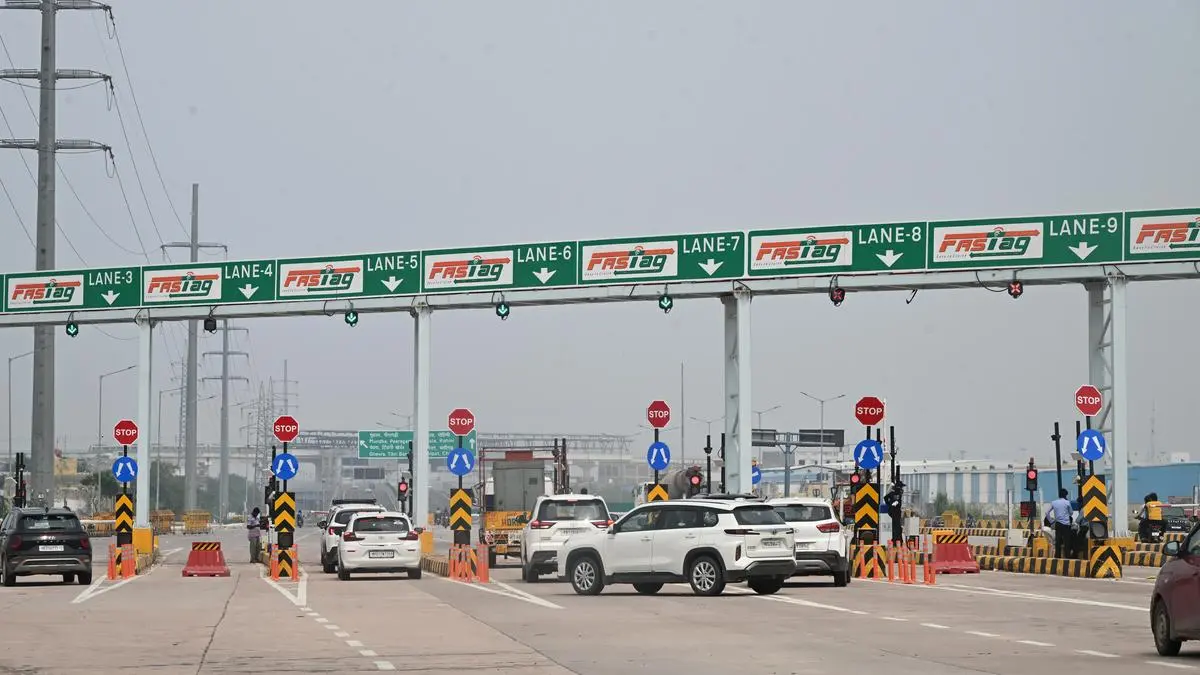
What’s the fun in having sprawling eight-lane national highways, if you have to slog at the toll gates to pay the toll fee using the machine-readable Fastag?
India has begun taking baby steps toward doing away with the age-old system that forces you to waste time every time you drive past a toll gate, and has moved to automatic toll fee collection at the plazas.
Pilot projects launched in Rajasthan and Telangana
Manoharpur in Rajasthan, and Hyderabad in Telangana are among the first live locations in India to implement barrier-less Multi-Lane Free Flow (MLFF) tolling infrastructure on national highways.
The system uses LiDAR (Light Detection and Ranging) technology, a real-time remote-sensing technology that uses laser beams to precisely measure distances and movement in an environment.
NHAI deploys AI-powered system for seamless tolling
The National Highway Authority of India (NHAI) has tied up with Cron AI to deploy its senseEdge platform, which allows toll gate operators to detect vehicle details in real time, classify them by make and other details, and collect fees automatically without requiring vehicles to stop.
“The system assigns a unique tracking ID, captures number plates via ANPR, and determines vehicle class from axle count and dimensions. The platform is designed to support FASTag-linked RFID as part of the full tolling stack,” Tushar Chhabra, Founder and CEO, Cron AI, told businessline.
Our technologies factor in the complex Indian traffic conditions, including inconsistent lane discipline, frequent vehicle overlap (occlusion) and weather events such as fog and heavy rains,” he said.
He said the company’s senseEDGE platform combines edge AI (which can process data near the data-generating points) and 3D perception capabilities to give tolling infrastructure a real-time understanding of traffic.
Chhabra said the system will be able to capture the relevant data amid the usual chaos at toll plazas.
“The system must be able to identify the vehicle, classify it correctly and trigger the right tolling action instantly. It can efficiently capture the swift and sudden movements and handle poor visibility,” he said.
Scalable system targets nationwide rollout
At current deployment levels in the Manoharpur and Hyderabad, the system is capable of processing an estimated 30,000 to 35,000 vehicles per day.
The country has a network of 1.46 lakh km of national highways. The Government has mandated the phased transition of over 1,100 toll plazas to Multi-Lane Free Flow systems