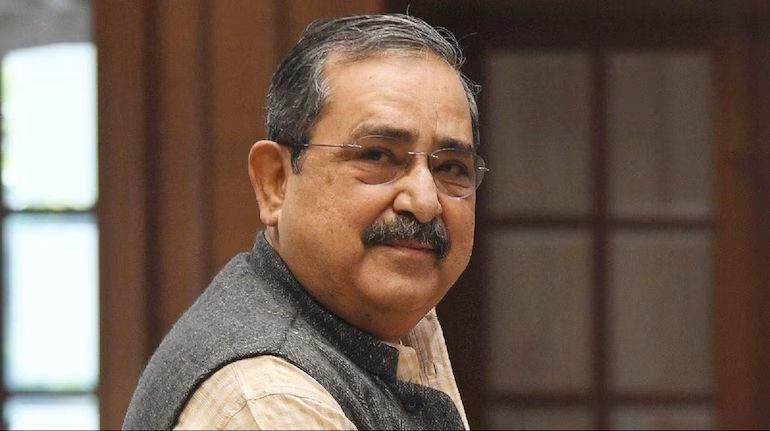
At a time when markets have been lukewarm despite a slew of reform measures by the central government and Reserve Bank of India, Niti Aayog Vice Chairman Ashok Kumar Lahiri told Moneycontrol that India must pursue aggressive reforms to facilitate both domestic and foreign investment. More specifically, the top policymaker pointed to the need for regulatory reforms and inducing behavioural changes as a priority to promote ease of doing business in the country.
There are many regulatory reforms and behavioural changes that are needed, because no one wants to invest money if you are giving [them] the runaround,” said Lahiri.
“You must facilitate investment rather than creating obstacles. We have improved, we have improved quite a bit, but there’s a long way to go. That’s what we need to do,” Lahiri said when asked what more needs to be done to revive investor sentiment.
The government and the Reserve Bank of India (RBI) unveiled a string of measures last week to boost capital flows against the backdrop of the Iran war to help shore up the rupee and boost investor sentiment.
Lahiri, who took over as Vice Chairman of the government think tank Niti Aayog last month, also drew up a large reform agenda across various sectors such as the welfare system, education, health and infrastructure and skilling.
First, on welfare, Lahiri emphasised the need for “rationalising the welfare system”. Stressing that he was a “great believer in welfare schemes, the Niti Aayog Vice Chairman emphasised that “it is imperative for a civilised society to help its indigent and vulnerable people, but if, in the process of helping, you also support those who are not so deserving, then there is a problem.”
Now, many of our welfare schemes, both at the centre and the states, have become non-targeted. How can we target them better?,” said Lahiri, making a strong case for a focussed approach on these schemes to help the vulnerable sections.
Second, Lahiri, who has been a former chief economic adviser and member of the 15th Finance Commission, said reforms in education, particularly primary and non-primary segments, should be the focus. “In education, the problem occurs at two levels:
problem of enrollment. Children are going to school, but whether they’re learning enough is the question,” said Lahiri.