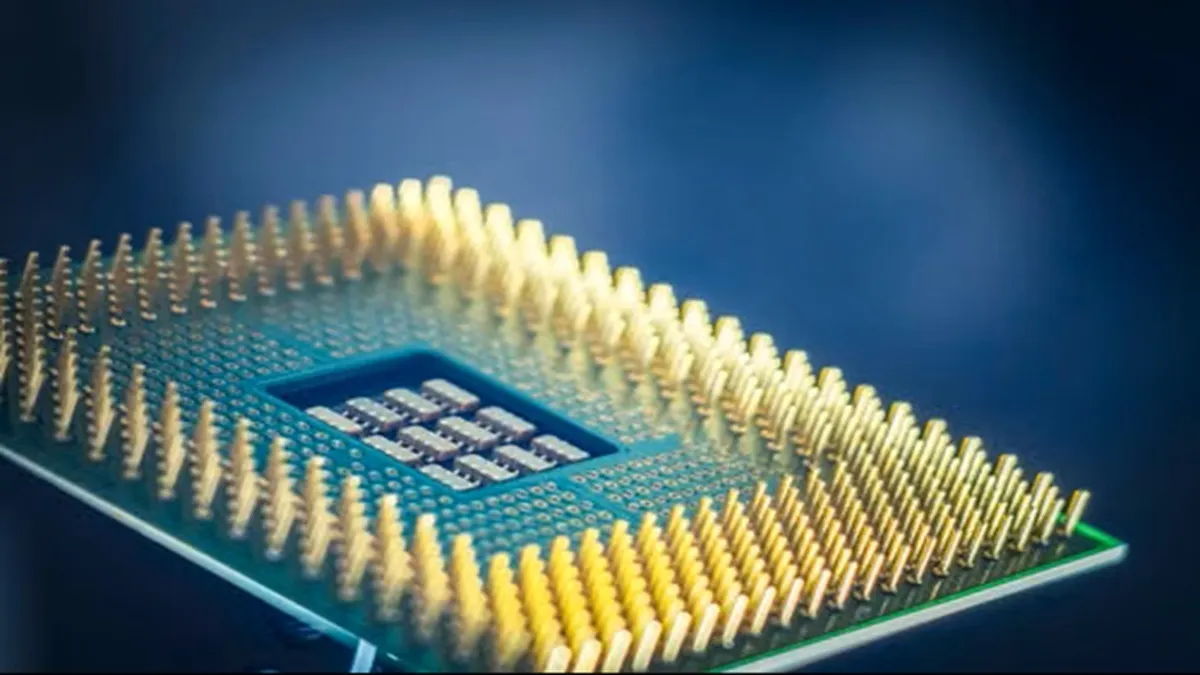
India is making a decisive bet on semiconductors as it looks to move beyond the foundational gains of Digital India into the next phase of technological self-reliance. The government recently approved 12 semiconductor projects worth about Rs 1.64 lakh crore amid efforts to build a national AI ecosystem backed by over 45,000 GPUs. The Ministry of Electronics and Information Technology said on Saturday that India was turning firmly towards “the frontier domains of artificial intelligence and semiconductor manufacturing” to define its technological future.
Chip manufacturing is no longer a distant ambition but a core industrial priority for the country as the Digital India programme completes 11 years. The emphasis is now on building capacity across the semiconductor value chain, from fabrication to packaging, so India can reduce import dependence and strengthen its position in a sector that powers everything from smartphones and electric vehicles to defence systems and data centres.
This push comes as the government links semiconductor manufacturing directly to national competitiveness and long-term growth. MeitY described the shift as part of India’s broader vision for Viksit Bharat 2047, arguing that the country has already built the digital base through broadband expansion, financial inclusion and citizen service delivery. The next step, it says, is to anchor India in frontier technologies that determine economic and strategic power. In that framework, semiconductors are not just an industrial segment; they are a strategic asset that can shape manufacturing depth, supply-chain resilience and export potential.The scale of the investment pipeline suggests India wants to create an ecosystem rather than isolated plants. With 12 projects already approved, the government is trying to lay the groundwork for a domestic semiconductor industry that can support electronics manufacturing, generate skilled jobs and attract more private capital. If executed well, this could help India move from being largely a consumer of chips to becoming a credible producer in the global supply chain, giving the country greater technological autonomy and a stronger role in the international race for semiconductor leadership.
Semiconductor and electronics projects in Uttar Pradesh
The assertions from MeitY came even as Uttar Pradesh Chief Minister Yogi Adityanath and Union Electronics and IT Minister Ashwini Vaishnaw laid the foundation stones for electronics manufacturing projects worth around Rs 6,750 crore in Jewar. The move is aimed squarely at strengthening India’s semiconductor and electronics ecosystem, and highlights Jewar’s emerging role as a major manufacturing node in North India. At the centre of the projects is a shift from import dependence to domestic production of printed circuit boards, or PCBs, which are critical components in electronic devices and are often described as the “brain” of the hardware chain.
Two major investments anchor the plan: ASCENT-K Circuit, a joint venture with Korea’s KCC, is investing Rs 3,250 crore to produce advanced, high-density, multi-layer PCBs, while AMBER Enterprises is setting up a Rs 3,500 crore facility focused on HVAC components and PCB assemblies. Together, the projects are expected to generate employment for around 3,000 people and significantly reduce India’s reliance on imports, especially in a segment where the country earlier brought in PCB imports worth roughly Rs 40,000 crore a year. Vaishnaw said Jewar is poised to emerge as one of India’s leading electronics and semiconductor hubs, adding that the country is moving “from assembly to deep manufacturing” and that advanced multi-layer PCBs built here will be made in India for the world.
The projects also have broader economic implications, officials said, because shifting PCB production to Jewar and other emerging hubs would save foreign exchange, improve the balance of payments and strengthen India’s currency and reserves. The region’s investment appeal is being boosted by the newly inaugurated Jewar International Airport, its proximity to the Delhi-Mumbai Industrial Corridor and the proposed Delhi-Lucknow-Varanasi bullet train corridor. With electronics production rising sharply over the last decade, the government sees Jewar as a strategic site that can help India move closer to its target of becoming a global electronics manufacturing leader.
Private sector key to India-US push in semiconductors, AI and critical minerals
The private sector will be indispensable in turning India-US cooperation in artificial intelligence, semiconductors, quantum technologies and critical minerals into real-world outcomes, as the two countries deepen collaboration in strategic technologies. MeitY Secretary S Krishnan highlighted India’s growing role as a global electronics and semiconductor hub, saying the country is positioning itself as a trusted and resilient partner in the technology supply chain. He said India’s electronics manufacturing base has expanded sharply, semiconductor fabrication is becoming a reality, and the next phase of the Semiconductor Mission will build on that momentum.
“Combined with India’s talent, digital public infrastructure, and AI capabilities, we have an opportunity to develop solutions not just for India, but for the world,” he said, underscoring the country’s ambitions in advanced technologies.
Additional Secretary in the Ministry of External Affairs (MEA) K Nagaraj Naidu said recent initiatives were laying the groundwork for long-term cooperation and that the partnership was now moving “from principles to projects.” He said India and the US have built a “comprehensive strategic partnership fit for the 21st century,” adding that industry would be central to converting policy frameworks into execution, investment and innovation.
India’s Ambassador to the US Vinay Kwatra said the two democracies have complementary strengths across chips, neural networks, semiconductors, AI and quantum technologies, and can together build trusted and resilient technology ecosystems with secure access to critical infrastructure. US-India Strategic Partnership Forum (USISPF) President and CEO Mukesh Aghi described microchips and critical minerals as the “elixir” of the modern economy, saying governments can create the enabling framework but industry will ultimately drive execution. The roundtable, organised by USISPF with the Embassy of India and Silverado Policy Accelerator, also included senior US officials from the Commerce Department and the Department of Energy.
From digital infrastructure to frontier tech: Rs 1.64 lakh crore pipeline for chips
The government has recently greenlit 12 semiconductor manufacturing projects totalling roughly Rs 1.64 lakh crore. This includes one semiconductor fabrication (fab) unit, two compound semiconductor fabs and nine testing and packaging facilities.
“India’s semiconductor ecosystem has moved decisively from policy to production,” an official government release said. MeitY added that the India Semiconductor Mission 2.0 — unveiled in the Union Budget 2026–27 — will further boost domestic capabilities in equipment, materials and indigenous intellectual property. Officials said these investments were intended to address supply‑chain vulnerabilities, create high‑value manufacturing jobs and attract ancillary industries.