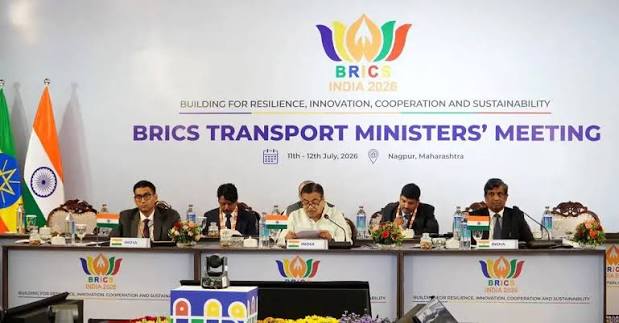
India’s union minister Nitin Gadkari advocated deeper BRICS collaboration for sustainable transport, highlighting India’s infrastructure innovations and urging joint solutions for shared mobility challenges.
With global mobility at a crossroads, India is making a strong case for BRICS nations to jointly reimagine the future of transportation. Union Minister for Road Transport and Highways, Nitin Gadkari, has called on the bloc to seize its collective influence and drive forward sustainable and resilient transport systems, positioning the group as a leader in shaping tomorrow’s mobility landscape.
Welcoming delegates from BRICS member countries to Nagpur, Gadkari used the occasion to underline India’s vision for its current chairship. This year’s theme, “Building for Resilience, Innovation, Cooperation and Sustainability,” is rooted in a people-centric philosophy inspired by the ancient Indian idea of ‘Vasudhaiva Kutumbakam,’ or the world as one family. According to an official release from the Ministry of Road Transport & Highways, this approach emphasizes human welfare, shared progress, and a commitment to future generations.
India’s rapid modernization across transportation sectors was highlighted as a model for fellow emerging economies. Gadkari outlined milestones such as the expansion of India’s road network, now the second largest globally, and the development of access-controlled expressways and multimodal corridors. Projects like the Delhi-Dehradun Economic Corridor and Sonamarg Tunnel, along with over 10,000 kilometers of new Greenfield Expressways, were cited as examples of blending innovation, efficiency, and sustainability.