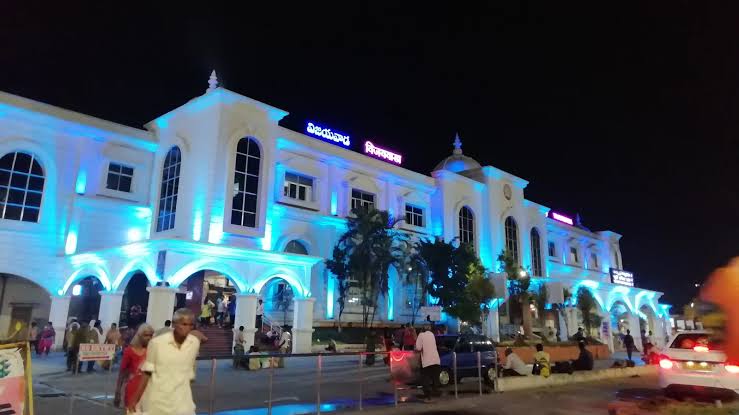
INDIA: Indian Railways has listed 15 stations for PPP redevelopment, with Vijayawada moving to a re-tender while the other 14 projects remain in master planning or financial modelling.
15 stations span multiple cities
The portfolio covers Vijayawada, Coimbatore Junction, Krantivira Sangolli Rayanna Bengaluru, Chennai Central, Andheri, Avadi, Tambaram, Bhopal, Vadodara, Kalyan, Dadar, Anand Vihar, Delhi Junction, Hazrat Nizamuddin and Pune.
The latest parliamentary reply gives the named portfolio and its current development status. The Ministry of Railways had already confirmed that 15 stations were being pursued under the PPP route, while Rani Kamalapati station in Madhya Pradesh had been developed and commissioned under that model.
The projects are not at a uniform procurement stage. Vijayawada has moved further through the approval process, while the other 14 stations are still described as being at various stages of master planning and financial modelling. That distinction is important because inclusion in the portfolio does not mean that a concessionaire has been selected or construction has started.
Don’t miss…MTA Vacuum Train Fire at Astor Place Injures 14 People
Vijayawada shows the scale of one PPP project
Government PPP records show that the Vijayawada redevelopment received final approval from the Public Private Partnership Appraisal Committee on 7 May 2025, with a recorded project cost of ₹946.60 crore and Viability Gap Funding support.
A project entry submitted by the Rail Land Development Authority gives a more detailed picture of the proposed physical scope. It says the station building is planned on 49.92 acres, with approximately 150,107 sq m of total floor area. The design includes about 84,059 sq m of operational area and 66,048 sq m of airspace area, with a design figure of 20,000 for peak-hour traffic.
Those figures apply to Vijayawada and should not be treated as a standard specification for the other 14 stations.
Most of the portfolio remains in planning
Vijayawada is also the clearest procurement test within the portfolio. The first redevelopment tender received no offers, according to the parliamentary reply, and the tender has therefore been re-invited.
For the remaining stations, the disclosed status is earlier: master planning and financial modelling. Indian Railways has not said in the supplied material that private partners have been appointed for those 14 projects.
The 15-station programme is therefore a pipeline at different levels of maturity rather than a single simultaneous procurement. Vijayawada provides the most developed example, while the next commercial steps for the other stations depend on completion of their planning and financial work.