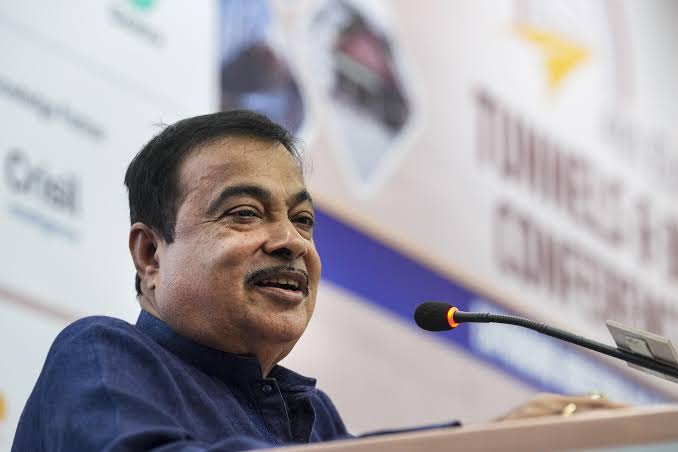
Road Transport and Highways Minister Nitin Gadkari on Thursday announced the approval of new AIS 228 standards for retrofitting rear emission-control devices on pre-BS6 heavy vehicles, with the technology capable of reducing particulate matter (PM) emissions by 90 per cent and nitrogen oxides (NOx) by 60 per cent.
The device, developed by an IIT Delhi-led team, costs around ~4,000-5,000 and has demonstrated emissions from a retrofitted BS4 vehicle comparable to those of a BS6 vehicle, Gadkari said.
At the same time, Gadkari urged original equipment manufacturers (OEMs) to actively support the government’s vehicle-scrappage drive by offering discounts to customers who scrap old vehicles and purchase new ones. He said the industry should view scrappage as a commercial opportunity that could boost vehicle sales and production, rather than merely as a government recommendation.
The government’s Parivartan scheme for the Delhi-NCR region, launched in July, targets the scrapping of more than 2 lakh older trucks and buses, and provides incentives for purchasing newer BS6 and electric vehicles. Gadkari asked OEMs to offer additional concessions against scrappage certificates, saying this would help accelerate fleet replacement while creating demand for new vehicles.
The twin approach of retrofitting older vehicles and accelerating their replacement through scrappage comes as the government seeks to tackle vehicular emissions in Delhi-NCR while supporting the renewal of the commercial vehicle fleets.
Gadkari said Bharat NCAP (New Car Assessment Programme) has emerged as a major success, with more than 30 models from 11 companies already certified under it. He said the initiative has also significantly lowered the cost of vehicle safety testing, with testing under Bharat NCAP costing around ~60 lakh per model compared with about ~2.5 crore under Global NCAP.
The lower cost has encouraged even foreign automakers to send vehicles to India for testing, he said, adding that the programme is also helping improve the credibility and quality of Indian vehicles in global markets.
Building on this, Gadkari said, the government plans to introduce Bharat NCAP 2 from October 2027, widening the assessment beyond crashworthiness to cover the entire safety chain — crash avoidance, passenger protection, pedestrian safety, and post-crash evacuation and care.
He said the government would also evaluate new global technologies and innovations developed by Indian startups as part of the expanded safety regime. Gadkari invited the automobile industry to share suggestions and technologies that could be incorporated into the programme.