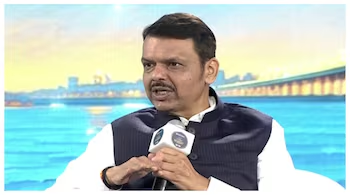
Maharashtra is on track to become a $1-trillion economy by 2030 despite fluctuations in the dollar-rupee exchange rate, Chief Minister Devendra Fadnavis said on October 28, asserting that the state continues to attract unprecedented investor interest despite global economic headwinds.
Fadnavis said Maharashtra’s economy had expanded to $660 billion since the state first set its trillion-dollar ambition in 2015, putting it closer to the milestone even as currency movements continue to shift the goalpost.
“In 2015, we had decided to make Maharashtra a $1 trillion economy and the journey has been phenomenal. We are $660 billion, we will achieve our target by 2030,” Fadnavis said.
Acknowledging the impact of currency depreciation on dollar-denominated economic targets, the chief minister said the shifting exchange rate was not a major concern.
“The dollar-rupee exchange rate keeps shifting the goalpost, but I am not worried about that,” he said.
Fadnavis said investor interest in Maharashtra had reached unprecedented levels across manufacturing, artificial intelligence, data centres and other emerging sectors.
However, he emphasised that the state’s success was not limited to attracting investment proposals but extended to converting commitments into projects.
“There is one thing to get interest, but we are scoring conversions as well,” he said.
According to the chief minister, about 60 percent of investment memorandums of understanding (MoUs) signed in Maharashtra have been acted upon, compared with 35–40 percent nationally.
The conversion rate for agreements signed at the World Economic Forum in Davos was even higher, at 75 percent, with projects at various stages of implementation, he said.
Ease of doing business over incentives
With an increasing number of states competing for investment, Fadnavis said Maharashtra was prioritising ease of doing business and policy certainty rather than relying excessively on financial incentives.
He said 12–13 states were now actively competing for investment and described this as a positive development for the country.
The chief minister argued that some states were offering incentives beyond their financial capacity, creating difficulties in fulfilling commitments made to investors.
Maharashtra, by contrast, had developed a more sustainable framework and was able to provide promised incentives within a year of signing investment agreements, he said.
He cited the state’s ability to manage the recent surge in electricity demand, while some other states had been forced to purchase power at exorbitant rates, as an example of its infrastructure preparedness.
Data centres and new growth corridors
Fadnavis said Maharashtra was working to address concerns surrounding the environmental impact of data centres, particularly water consumption and climate-related issues.
While data centre projects had faced opposition in several countries, the resistance in Maharashtra had been relatively limited, he said.
The state government was engaging with communities to explain how resources would be sourced and managed for these projects.
The chief minister also outlined plans for a new urban ecosystem around the Atal Setu and Navi Mumbai airport, describing the development as Mumbai 3.0.
The proposed NAINA development would accommodate a cluster of thematic cities, including an education city, a medical technology city and a global capability centre hub.