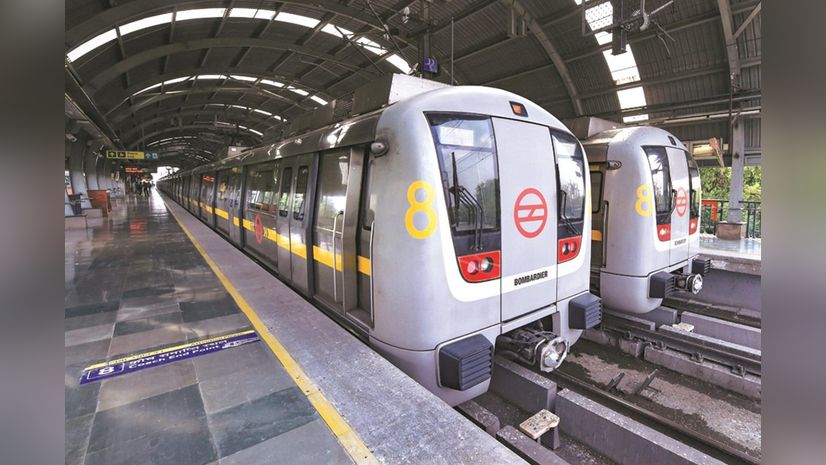
As Metro rail expansion gathers pace nationwide, public-private partnership (PPP) projects in the segment are showing signs of strain. L&T’s decision to exit the Hyderabad Metro project and Reliance Infrastructure’s earlier attempts to divest its stake in Mumbai Metro Line 1 have underscored the need to recalibrate the PPP model.
Even as Metro networks expand rapidly across nearly 20 cities, large-scale systems have proved difficult to sustain as commercially viable private assets. Governments continue to lean on private capital to bridge funding gaps, but experts suggest the model needs recalibration amid recent exits of private players.
Hyderabad Metro Phase-I, one of the world’s largest PPP metro projects, is set to be taken over by the Telangana government, which will refinance debt and acquire L&T’s entire equity stake. The government will provide around ₹2,000 crore in cash to L&T as a onetime settlement, while it assumes around ₹13,000 crore of SPV-level debt. L&T’s investments in the project hovered around ₹7,000 crore at the end of the second quarter of FY26.
The exit is financially pragmatic for L&T, as the project posted over ₹626 crore in losses in FY25 and the firm’s departure is expected to improve the company’s return on equity by 60-70 basis points, according to equity research firm JM Financial. This comes amid only partial materialisation of the announced ₹3,000 crore in phased state support, with only ₹900 crore provided as of Q2 FY26, alongside a fall in rides after the government announced concessions for women in state buses.
Ridership averaged 414,000 passengers daily in Q3 FY26 versus 445,000 a year earlier, and despite a fare hike in May 2025, the project continued to post losses, reporting a net loss of ₹185 crore in Q3 FY26 vs a net loss of ₹203 crore in Q3 FY25.