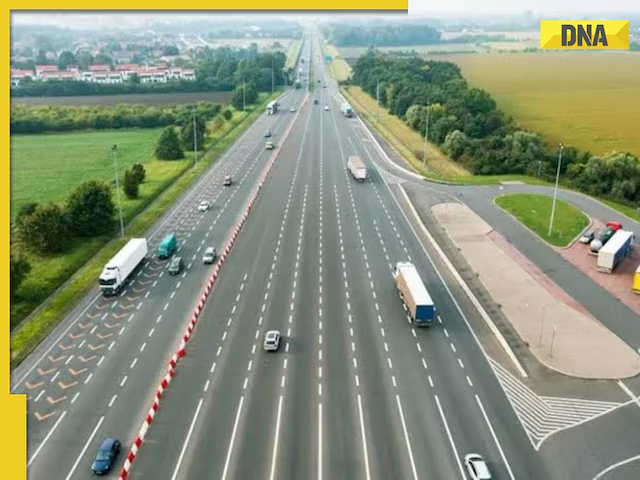
The expressway is nearing completion, with the section from Vadodara to Mumbai expected to be finished by June this year. Once completed, the Delhi-Mumbai Expressway will significantly reduce travel time between the two cities, making it a major boost for trade and commerce The construction of the Kota Tunnel in Rajasthan’s Kota has been completed, marking a significant milestone in the Delhi-Mumbai Expressway project. The tunnel is expected to be operational next month, reducing travel time between Gurugram and Vadodara from 20-22 hours to 10-12 hours, according to a report by Jagran. The 1380-kilometer-long Delhi-Mumbai Expressway aims to improve connectivity between the national capital and the country’s economic hub.
Eight-lane greenfield expressway
The Delhi-Mumbai Expressway is an eight-lane, access-controlled greenfield project being developed in multiple phases. The project starts from Aliprur village near Sohna and passes through several key cities, including Alwar, Jaipur, and Kota. The expressway’s construction has been undertaken with careful consideration for the environment, particularly in areas like the Mukundara Hills Tiger Reserve, where the 4.9-kilometer-long Koita Tunnel has been built to minimize the impact on wildlife.
Tunnel construction and features
The Koita Tunnel has been constructed to ensure that the wildlife in the area is not disturbed. The tunnel’s design allows vehicles to pass underneath without causing any disruption to the ecosystem. With the tunnel’s completion, the 25-kilometer stretch of winding roads near Kota will become a thing of the past, making the journey smoother and faster for commuters.
Project progress and future Plans
The expressway is nearing completion, with the section from Vadodara to Mumbai expected to be finished by June this year. Once completed, the Delhi-Mumbai Expressway will significantly reduce travel time between the two cities, making it a major boost for trade and commerce. The expressway is designed to accommodate future growth, with provisions to expand it to 12 lanes as needed.
The project’s completion will also spur economic development in the regions it passes through, including Haryana, Rajasthan, Madhya Pradesh, and Gujarat.
Traffic and Infrastructure
The Delhi-Mumbai Expressway is expected to handle a significant volume of traffic, with current average daily traffic of 25-30 thousand vehicles. The expressway’s infrastructure is designed to support high speeds, with vehicles allowed to travel at up to 120 kilometers per hour. The project includes provisions for future upgrades and expansions, ensuring it remains a vital transportation artery for years to come.
Key cities and regions connected
The Delhi-Mumbai Expressway will pass through several major cities, including Delhi, GuruGram, Alwar, Jaipur, Kota, Udaipur, Bhopal, Indore, Ahmedabad, Vadodara, and Surat. The project will improve connectivity and spur economic growth in these regions, benefiting millions of people. The expressway is a testament to the government’s focus on developing world-class infrastructure to drive India’s growth story forward