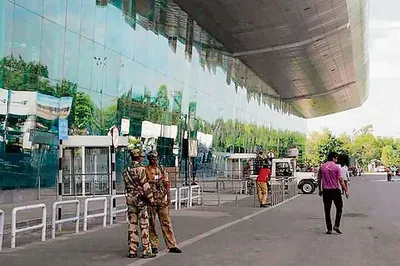
India is considering imposing a cap on bids by a single entity in the planned privatisation of 11 airports amid growing concern over market concentration and the risk of monopoly in the civil aviation sector, sparked by last year’s crisis at IndiGo which rippled across the industry.
Government officials involved in the process said discussions have begun on ways to structure the bidding rules to encourage competition and prevent crucial infrastructure from getting concentrated in the hands of a single enterprise.
The deliberations come ahead of what is expected to be one of the most significant airport privatisation exercises undertaken in the country.
In the 2018 privatisation round, which didn’t have any such limit, Adani Enterprises emerged as the highest bidder for all the six airports on offer — in some cases quoting double the tender amount of the second-highest contender. Jeet Adani, director at Adani Group, has already signalled that the group will aggressively pursue all 11 airports in the new round, making the issue of placing a cap on bids all the more pressing for policymakers.
However, there is a second school of thought among officials who say that setting a strict threshold could make bidders conservative, potentially lowering auction proceeds.
Officials from the civil aviation and finance ministries and Niti Aayog are working on the framework, with the final call resting with the Public Private Partnership Appraisal Committee (PPPAC), the government body tasked with approving large-scale infrastructure privatisation.
However, not everyone in the government is convinced. A finance ministry official cautioned that imposing participation limits could lead to conservative bidding, ultimately reducing the value the Centre. would eventually garner from the exercise.
The official noted that the 2018 round of airport privatisation resulted in windfall gains for the Airports Authority of India (AAI) which currently earns more than Rs 700 crore annually in fees from the six airports.
The Centre has set an ambitious monetisation target of Rs 27,500 crore for civil aviation under NMP 2.0 over five years through FY30.