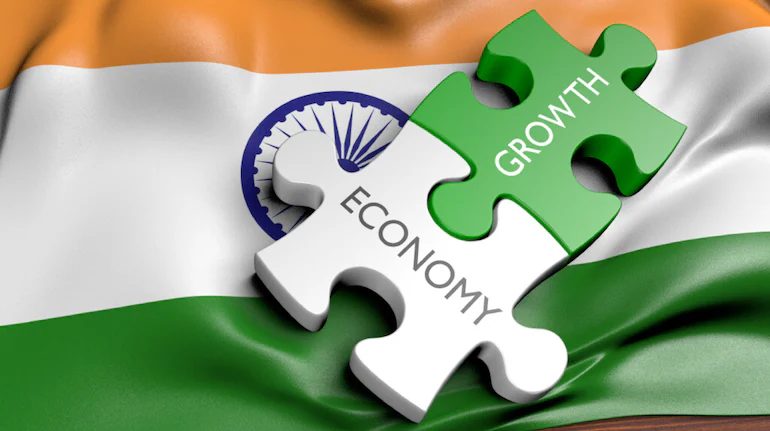
India’s net zero journey must be assessed through the lens of climate justice, development needs and per capita emissions, Medha V Kulkarni, Member of Parliament, Rajya Sabha, and Chairperson of the Parliamentary Standing Committee for Science & Technology, Environment, Forests and Climate Change, said on Tuesday.Speaking at the 4th Edition of The Economic Times India Net Zero Forum’26, she said India has shown that climate commitments can be pursued without compromising economic growth, advancing renewable energy, green hydrogen, electric mobility, and ethanol.
Kulkarni said India’s approach to net zero is rooted in the principle that economic development and environmental sustainability must progress together. Referring to Prime Minister Narendra Modi’s announcement of the Panchamrit commitments at COP26 in Glasgow, she said the targets were initially seen by many as ambitious, but India has since demonstrated measurable progress.“India is not only committing this, but India is delivering the results,” she said, underlining that the country’s net zero pathway is increasingly backed by policy action across sectors.
She said India’s emissions profile must be viewed in the context of its population, development needs and the principle of common but differentiated responsibilities. While India is among the major global emitters in absolute terms, she said the country hosts a large share of the world’s population and has a much lower per capita emissions footprint compared with several developed economies.“India is not only committing this, but India is delivering the results,” she said, underlining that the country’s net zero pathway is increasingly backed by policy action across sectors.
She said India’s emissions profile must be viewed in the context of its population, development needs and the principle of common but differentiated responsibilities. While India is among the major global emitters in absolute terms, she said the country hosts a large share of the world’s population and has a much lower per capita emissions footprint compared with several developed economies.fuel dependence while creating additional income opportunities for farmers.
“Sustainability is not only the government’s programme, but every citizen should participate in it, because it is a collective responsibility,” she said.
She added that Mission LiFE, or Lifestyle for Environment, aims to bring citizens into India’s climate action framework by encouraging sustainable daily choices. This, she said, reflects the need to make net zero a mass movement rather than a policy target limited to government and industry.
Kulkarni also referred to India’s work on forest conservation, wildlife protection, wetland conservation, ecosystem restoration and water conservation through initiatives such as Namami Gange and Amrit Sarovar. She said these programmes are contributing to climate resilience while strengthening India’s environmental governance framework.
She said India has achieved its Paris Agreement target on reducing the emissions intensity of GDP ahead of schedule, while green jobs are being created in renewable energy, electric mobility, waste management, green manufacturingand emerging clean technologies.
“India today stands amongst the most attractive destinations globally for renewable energy investments,” she said.
Kulkarni said the Parliamentary Standing Committee for Science & Technology, Environment, Forests and Climate Change will continue to examine policies, assess implementation and strengthen accountability in India’s environmental governance architecture.
Concluding her address, she said India’s net-zero transition will require collaboration among government, industry, academia, financial institutions, startups, and citizens.
“Let us work together to transform India’s net zero vision into reality,” she asserted.