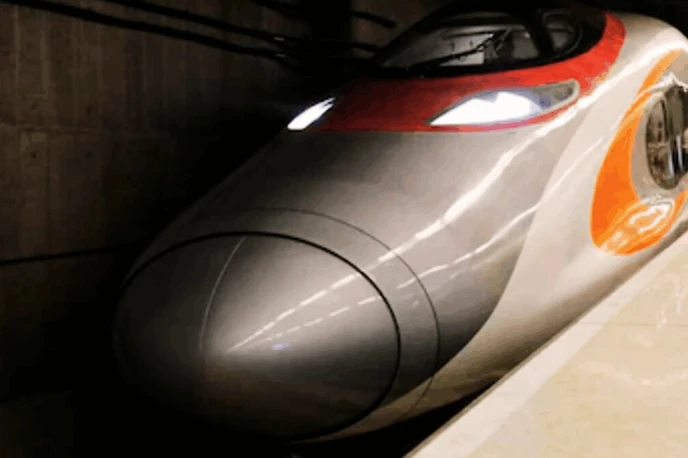
Hyderabad: Come 2037, bullet trains will chug in Hyderabad.
The government is setting up three bullet train corridors connecting Hyderabad to Pune, Bengaluru, and Chennai.
Railway officials told NewsMeter that the Detailed Project Report (DPR) is currently being prepared for bullet train corridors.
While the DPR for the Hyderabad-Pune corridor has already been submitted, studies for the Hyderabad-Bengaluru and Hyderabad-Chennai routes are under preparation.
The proposed corridors are expected to be developed as dedicated high-speed rail lines capable of supporting trains operating at speeds of up to 320 kmph.
Officials estimate that constructing one kilometre of such elevated infrastructure could cost around Rs 250 crore, making it one of the largest transportation investments proposed for the region.
The project is now being handled by the National High Speed Rail Corporation Limited (NHSRCL), the agency implementing India’s first bullet train project between Mumbai and Ahmedabad.
Project currently in DPR stage
The proposed Hyderabad bullet train corridors are still in the planning phase, with DPRs being prepared to assess their technical and financial feasibility.
The reports will determine several key aspects of the project, including route alignments, station locations, passenger demand, travel times, project costs, ticket pricing, operational expenses, maintenance requirements and land acquisition needs among others.
According to railway officials, once the DPRs are completed, they will be evaluated by various ministries and agencies of the Central government, including NITI Aayog.
Following these reviews, the proposals will require Cabinet approval before construction can begin.
Officials said the DPR exercise will also provide a clearer estimate of the overall project cost and implementation timeline.
Why will the bullet train corridor be elevated?
Unlike conventional railway lines, the proposed bullet train network is expected to run on fully elevated standard-gauge tracks.
Railway officials say the decision is primarily driven by safety and operational requirements.
“The design speed of the bullet train is going to be 350 kmph, while the operational speed could be around 320 kmph. At such speeds, there cannot be any barriers or disturbances on the route,” an official explained.
Officials cited the example of the Vande Bharat trains, which currently operate at speeds of up to 130 kmph and require extensive fencing along their routes to prevent accidents involving animals and trespassers.
For bullet trains running at more than double that speed, a completely segregated corridor becomes essential. An elevated alignment eliminates level crossings and significantly reduces the possibility of human or animal intrusion on the tracks.
Officials also pointed out that elevated structures can reduce complications associated with acquiring a continuous strip of land across long distances.
The stations too are expected to be elevated, similar to Metro Rail stations seen in several Indian cities.
Rs 250 crore per kilometre: Understanding the costs
Building high-speed rail infrastructure comes with a substantial price tag.
Officials estimate that constructing one kilometre of elevated bullet train corridor could cost approximately Rs 250 crore.
The final cost will depend on the route length, number of stations, signalling systems, rolling stock, depots, maintenance facilities and other associated infrastructure.
How fast will the trains run?
Officials said the proposed trains are likely to have a design speed of 350 kmph and an operational speed of around 320 kmph.
While the exact travel times between Hyderabad and the three proposed destinations have not yet been finalised, the high-speed network is expected to significantly reduce journey durations compared to existing rail services.
What role will the Telangana government play?
Although NHSRCL is the implementing agency, state governments will play a critical role in the project’s execution.
Officials explained that while NHSRCL is responsible for planning and implementing the corridor, the respective state governments will facilitate land acquisition and local clearances within their jurisdictions.
Coordination between the Centre and the states will be crucial, particularly because the proposed corridors will pass through multiple states before reaching their destinations.
What happens after the DPR is completed?
Once the DPRs are finalised, the reports will undergo scrutiny by various departments and agencies of the Central government, including Niti Ayog.
The proposals will be assessed for technical feasibility, economic viability, funding requirements and expected benefits before being placed before the Union Cabinet.
Only after receiving the necessary approvals will the project move into the implementation stage.
Officials said the approval process itself could take considerable time given the scale and financial implications of the project.
What Hyderabad can learn from the Mumbai-Ahmedabad bullet train project
Railway officials say the ongoing Mumbai-Ahmedabad High-Speed Rail Corridor offers valuable lessons for future projects, including those proposed for Hyderabad.
The 508-km corridor is India’s first bullet train project and is being implemented using Japanese Shinkansen technology.
The project includes 12 stations, extensive viaducts, tunnels, bridges, maintenance centres and dedicated depots. It has also led to the development of specialised expertise within India in high-speed rail construction and operations.
Officials believe this experience could help reduce execution challenges for future corridors.
India initially faced a shortage of professionals trained in high-speed rail systems. However, with the Mumbai-Ahmedabad project progressing, a skilled workforce is gradually being developed.
NHSRCL has also established dedicated training infrastructure, including a high-speed rail training institute in Vadodara, to support future projects.