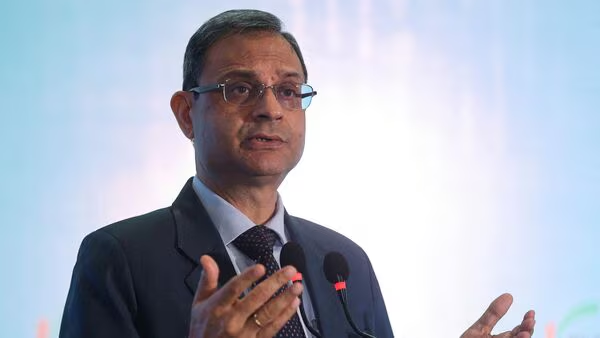
The Reserve Bank of India (RBI) on February 6 revised GDP growth forecast for the ongoing financial year to 7.4 percent from 7.3 percent earlier in the first policy review of 2026.
Real GDP growth for Q1 FY27 has been revised to 6.9 percent from 6.7 percent and Q2 to 7 percent from 6.8 percent, with risks evenly balanced. The MPC deferred GDP projection for full year to April review after the release of new series, RBI governor Sanjay Malhotra said.
Malhotra said, amid heightened geopolitical tensions and elevated uncertainty, the Indian economy remains in a robust position with strong growth and low inflation.
“Since the last policy meeting, external headwinds have intensified, though successful trade deals and Budget measures to boost manufacturing and exports bode well for the economic outlook. Overall, the near-term domestic inflation and growth outlook remain positive,” he said.
Economic activity continues to show resilience, supported by domestic factors. First Advance Estimates suggest ongoing momentum, driven by private consumption and fixed investment, even as net external demand remained a drag due to imports outpacing exports.
On the supply side, growth in real GVA, led by a strong services sector and a revival in manufacturing, is estimated at 7.3 percent in FY26.
Looking ahead to FY27, economic activity is expected to remain firm.
Agriculture will benefit from healthy reservoir levels, robust rabi sowing, and improved crop conditions.
Manufacturing and construction sectors should see sustained growth, aided by improving corporate performance, high capacity utilisation, and government infrastructure push. On the demand side, private consumption is expected to stay strong, with rural demand supported by a buoyant agricultural sector and improving labour market conditions, while urban demand benefits from GST rationalisation and monetary easing.
The recently concluded India-EU free trade agreement (FTA), the prospective India-US trade deal, and other trade arrangements are expected to support exports over the medium term.
Services exports are likely to remain resilient.
“Nevertheless, spillovers from geopolitical tensions, global financial market volatility, and shifting trade patterns pose risks to the outlook,” he said.
The RBI’s monetary policy committee held rates steady, citing benign inflation and easing concerns over US tariffs following trade agreements.
A Moneycontrol poll had pointed to a status quo. With the gross domestic product (GDP) data shifting to the new base year (2022–23) and revisions underway, experts said the MPC was unlikely to alter growth projections immediately. It would wait for revised GDP numbers to be released later this month.