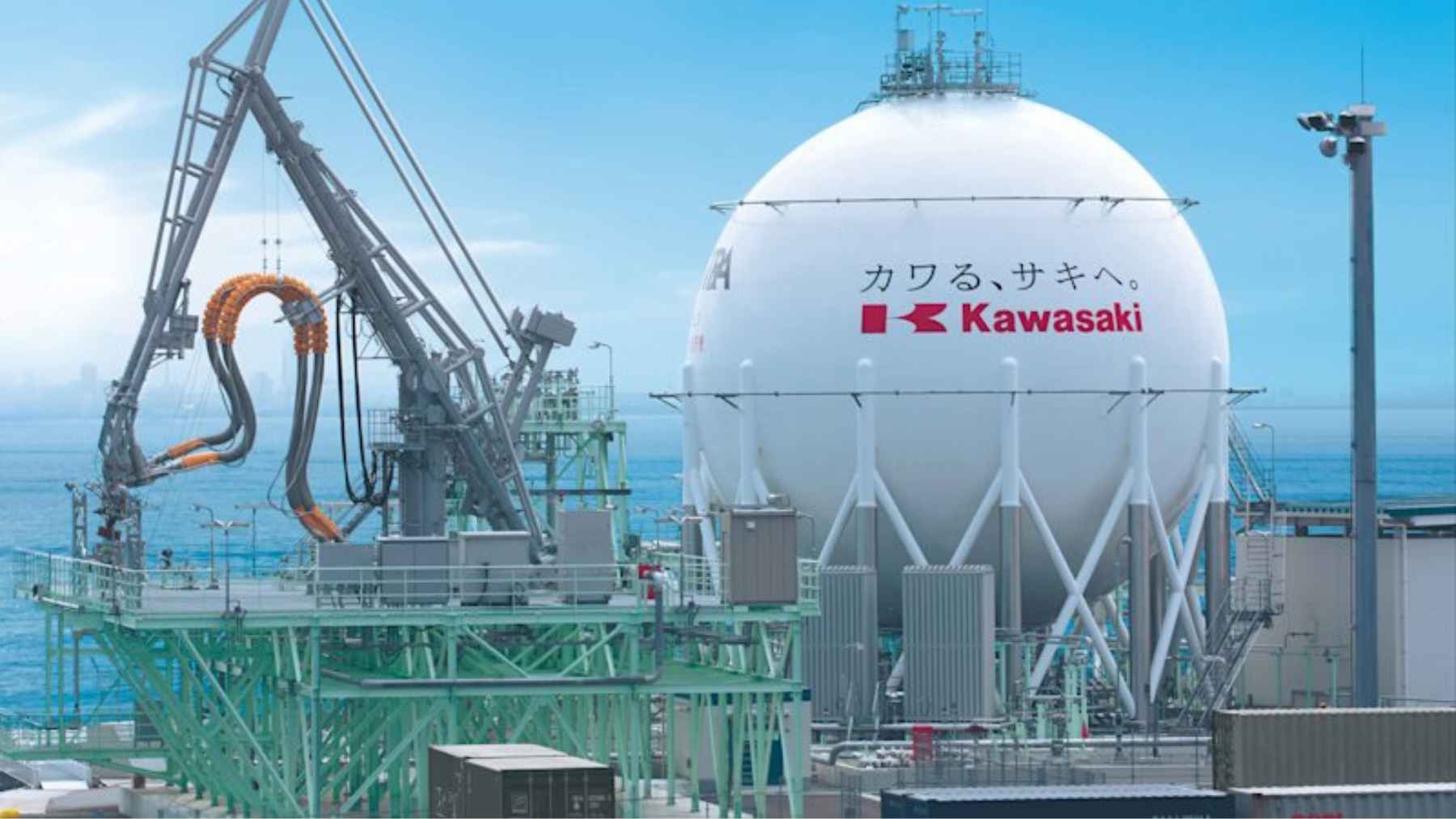
For many households and factories, the energy transition often feels distant until the electric bill jumps or the lights flicker on a hot summer evening. Now Japan is putting a very tangible tool into that transition, unveiling the world’s first commercial large gas engine that can generate electricity using a fuel mix with 30% hydrogen by volume blended into natural gas.
In late 2025, Kawasaki Heavy Industries quietly opened the order book for this hydrogen ready model. The unit sits in the eight megawatt class for distributed power plants and is built on the company’s KG series platform.
Sales began only after an eleven month operational trial at the Kobe works that started in October 2024 and checked how the system behaved under real-world conditions, not just in a lab.
On paper, the idea sounds straightforward. Add hydrogen to the fuel, keep the same pipes and tanks, and trim carbon dioxide emissions from each kilowatt hour. In practice, the design reflects a transition mindset that tries to give plant operators a cleaner option without forcing them to scrap equipment that still works.
How a 30% blend fits existing gas grids
The new engine can burn fuel that contains up to 30% hydrogen by volume, with the balance supplied by natural gas. Engineers chose that level because it can usually move through existing distribution networks with only limited adjustments instead of a complete rebuild of pipelines and storage tanks.