DRIVEN BY near double-digit growth in manufacturing and services sectors, the economy grew a robust 7.8% year-on-year in the April-June quarter, despite the headwinds caused by the West Asia conflict, high energy prices and supply disruptions. This is well above the Reserve Bank of India forecast of 7%.
The manufacturing sector grew by 9.2% in April-June, up from 8.3% in the same quarter last year, while the tertiary sector — or services — expanded 10%, higher than 8% a year ago, data released by the Ministry of Statistics and Programme Implementation (MoSPI) on Monday showed.
Prime Minister Narendra Modi said the 7.8% figure “is a herculean feat”. Finance Minister Nirmala Sitharaman said the government’s reforms and its “agile management” of the economy are bearing results.nalysts, however, said high growth rates could mean a rate hike is on the horizon. A fast growing economy, inflation prints ambling northwards, zero real interest rates, RBI monetary policy members looking at rate hike scenarios, and oil prices showing few signs of cooling, all these put together make a case for policy rate hike this year stronger than before, said Venkatesh Balakrishnan, Head-Credit Research, SBI Capital Markets.
Earlier this month, on August 5, the RBI had left the repo rate unchanged at 5.25%.
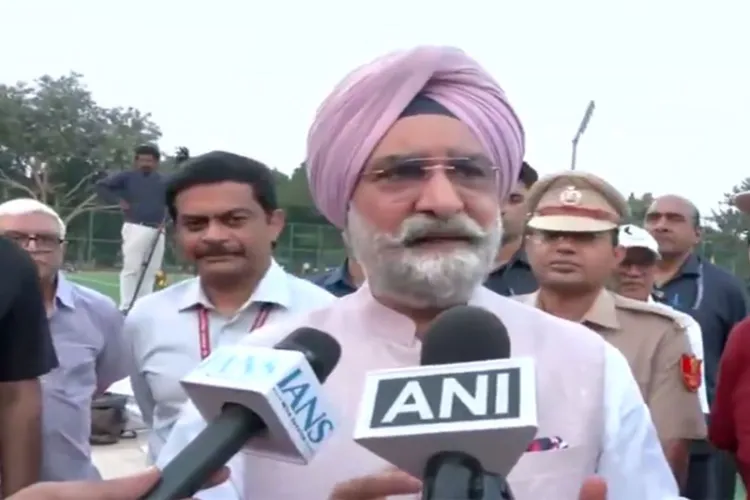
The CEA warned that disruptions from West Asia are expected to last longer than initially expected. As such, there is “always a lurking risk of crude oil supply disruption which may prevent oil prices from declining “materially and sustainably below $80 per barrel”.“However, more than the rise of crude oil, what we should be watching are the prices of petroleum products such as diesel and natural gas which have basically made it more expensive and that will have an implication for private consumption growth in parts of Europe and in the US,” Nageswaran said.
Sequentially, the April-June GDP growth rate is lower than the 8.6% recorded in January-March, which was revised up from the previous estimate of 7.8%. It is, however, well above the 6.9% posted in the April-June quarter last year.
As a result, economists have already begun raising their growth forecasts for 2026-27 as a whole. CareEdge Ratings, for instance, has raised its growth estimate for the year by 30 basis points (one basis point is a hundredth of a percentage point) to 7.3%, significantly higher than the RBI full-year estimate of 6.7%.Revisions were also made to previous years’ data, with GDP growth in 2023-24, 2024-25, and 2025-26 raised by 10 bps each to 7.3%, 7.2%, and 7.8%, respectively. These revisions are caused by the use of the new output Producer Price Index (PPI), the updated Index of Industrial Production (IIP) data series, and the Banking Services Price Index released earlier this year.“This marks the fourth consecutive quarter of near-potential growth rate for the Indian economy, and momentum into the second quarter of FY27 remains very strong,” said Rajni Thakur, L&T Finance’s Chief Economist.
Headline retail inflation has been rising in wake of the West Asia war and is projected by the RBI to average 5.9% in the last three months of 2026. The central bank is mandated to target inflation at 4% in a band of 2-6%.
“There are anecdotal reports in the media that corroborate the fact that the private sector’s gross fixed capital formation is showing very clear uptick even though it may be confined to a few sectors, but the bank credit growth also reinforces this feeling that there is more credit available and more investment activity happening in the country,” Nageswaran said.
He said all three sectors – agriculture, manufacturing, and services – had done “quite well” in the first quarter even in the face of the West Asia conflict. This was made possible partly because of the government’s efforts to make sure that input provisions were not affected by the war.
Services growth was driven by the ‘financial, real estate, IT, professional services, and ownership of dwelling’ sub-head, which posted a growth of 12.1% compared to 8.8% in the first quarter of 2025-26.
Without adjusting for inflation, or in nominal terms, GFCF growth in April-June was a sharp 20.4% – nearly four times the pace last year – helping increase its share in GDP to 34.3%. It stood at 31.4% in April-June 2025. This rapid growth “is a major takeaway as this involves both private and government expenditure with the former being driven by data centres and power besides metals” in this quarter, said Madan Sabnavis, Chief Economist at Bank of Baroda.
An increase in the share of GFCF is seen as a key prerequisite for India’s growth to become broad-based and sustained. While the West Asia crisis has not adversely impacted real growth, the rise in prices it has caused has pushed up nominal growth to an eight-quarter high of 10.3%.
Nominal GDP growth is the value of all final goods and services produced in the country, without adjusting for the level of inflation. As such, nominal GDP growth is usually higher than real growth.
Meanwhile, gross value added (GVA) rose by 8.2% in April-June, up from 7.0% in the first quarter of 2025-26.
GVA measures the value addition, or the difference in value of output produced and the value of input used. It is also calculated by subtracting net product taxes from the GDP.
Moving forward, economists expect growth to slow down somewhat, especially in the second half of the year. As per the RBI forecast of August 5, GDP growth is seen at 6.4% in July-September, 6.5% in October-December, 6.8% in January-March 2027, and 7.3% in April-June 2027. For 2026-27 as a whole, the RBI’s growth forecast is 6.7%.