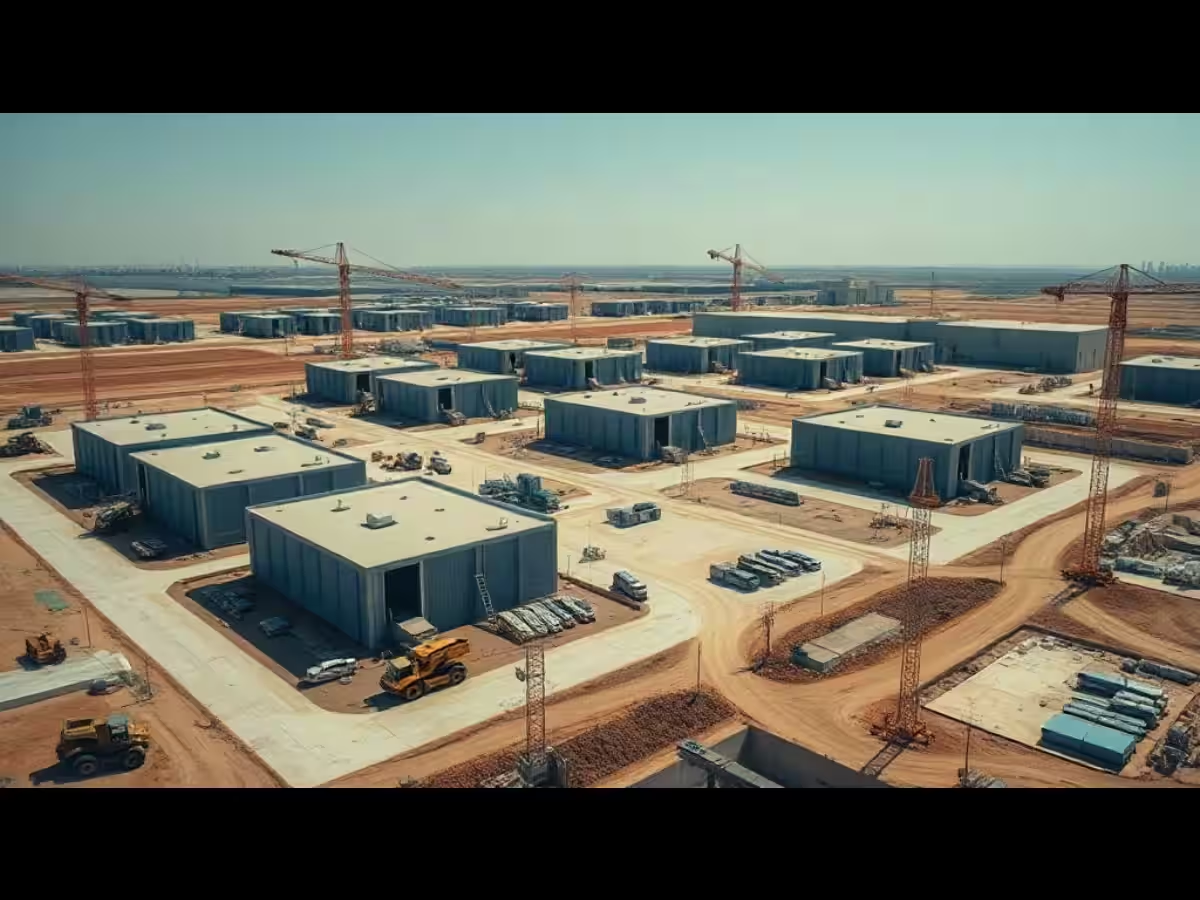
The surge is driven by demand from generative artificial intelligence (GenAI), enterprise digitalisation, and rising data consumption. However, timely power connectivity, regulatory approvals, and disciplined project execution will be critical for expansion and maintaining the credit quality of data centre developers.NEW DELHI: India’s data centre industry is entering an investment supercycle, with installed capacity projected to reach about 7.5 gigawatts (GW) by March 2030, CRISIL said in a report released on Tuesday. This expansion is set to attract investments of more than ₹3 lakh crore over the four fiscals.
The surge is driven by demand from generative artificial intelligence (GenAI), enterprise digitalisation, and rising data consumption. However, timely power connectivity, regulatory approvals, and disciplined project execution will be critical for expansion and maintaining the credit quality of data centre developers.Nearly half of the upcoming capacity is already committed under long-term contracts, which limits speculative development and reduces offtake risk. These upfront tie-ups with hyperscalers provide revenue certainty, de-risking projects despite the scale and speed of planned build-outs.
India offers structural cost advantages, making it an attractive data centre destination. Development costs are around one-fifth lower than in several competing Asia-Pacific markets, according to Anand Kulkarni, Director, Crisil Ratings. This is due to more competitive land, construction, and labour costs.Combined with lower power tariffs, this translates into rentals that are 30-35 per cent lower than in peer markets. Kulkarni also noted that the ability to develop large, renewable-powered campuses aligns with hyperscalers’ sustainability goals, reinforcing India’s competitive positioning.
However, this rapid growth is creating power infrastructure bottlenecks. About three-fourths of the upcoming capacity, approximately 6 GW, is expected in Visakhapatnam, Mumbai, and Hyderabad. By fiscal 2030, data centre capacity in these cities could account for around 80 per cent, 60 per cent, and 20 per cent, respectively, of their current peak power demand.The quality of contracted revenues has strengthened, Nitin Bansal, Associate Director, Crisil Ratings, said. Contract tenors have lengthened to 15-20 years from 10-12 years previously, enhancing cash flow visibility for developers.
High migration costs and rising replacement capital expenditure (capex) should support customer retention, although a meaningful contract renewal track record is still developing. Developers also need to invest in upgrades to support higher power density and advanced cooling infrastructure for next-generation GenAI workloads.
Even so, hyperscaler dominance, which underpins demand visibility, also creates customer concentration and pricing risk. Hyperscalers are expected to account for 75-80 per cent of industry capacity by fiscal 2030, up from 60-65 per cent in fiscal 2026. While pricing has been stable, increased capacity additions and greater hyperscaler bargaining power could pressure rentals and weaken project returns.
From a credit perspective, debt levels are expected to remain elevated over the medium term due to large upfront capex preceding cash generation by 24-36 months. Nevertheless, strong cash flows from commissioned projects and utilisation ramp-up should gradually improve leverage.