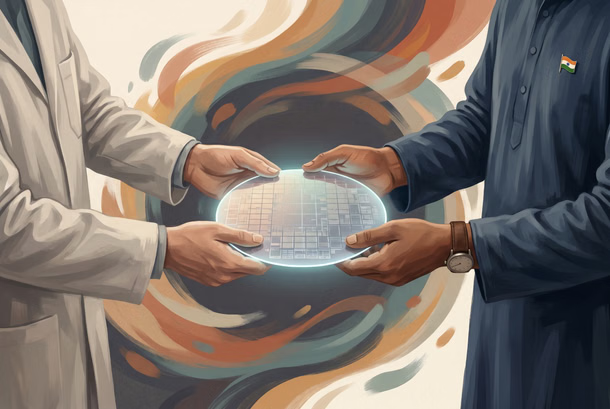
- A complete account of every project, grant, and design-stage investment under ISM 1.0.
- And a brief look at why the next phase, focused on the equipment, materials, and IP that fabs consume, may turn out to be the harder problem.
In the summer of 2023, the cleverer sort of person in Delhi had a settled view of the India Semiconductor Mission.
It was, depending on the dinner party, either a vanity project, a subsidy giveaway, or a Vedanta press release with a government letterhead. When Foxconn walked away from its $19.5bn joint venture with Anil Agarwal’s mining group that July, the obituaries practically wrote themselves. India, the chorus went, would never make a chip.
Three years on, the mood is rather different. On May 5th 2026 the Union cabinet approved Crystal Matrix and Suchi Semicon, two semiconductor units in Gujarat worth a combined Rs 3,936 crore. They were, by Ashwini Vaishnaw’s own admission, the last to be cleared under the first phase of the mission.
With them, the tally stands at twelve sanctioned units across seven states, with cumulative committed investment of roughly Rs 1.64 lakh crore — close to $19bn, or, as it happens, almost exactly the sum Foxconn was supposed to provide on its own. India does not yet make a leading-edge logic chip. But it has now shipped its first DRAM module to Dell, opened its first multi-chip-module line, broken ground on a glass-substrate packaging plant, and signed a technology-transfer pact with Taiwan for a 28-nanometre fab. The cynics, for once, were too clever by half.