Railways Minister Ashwini Vaishnaw just announced plans for a Delhi-Siliguri Bullet Train line, and it’s going to completely change how we look at distance. The whole point of this project is to connect the capital straight to North Bengal, slashing the usual 20-hour train nightmare down to a smooth 6-hour ride. Anyone who has ever suffered through that long journey out East knows exactly how massive of a shortcut this is going to be for both daily travelers and local businesses.
Delhi-Siliguri Bullet Train: An Overview
- The Tracks: Forget about old track upgrades. This is a brand-new, standalone rail network built entirely from scratch.
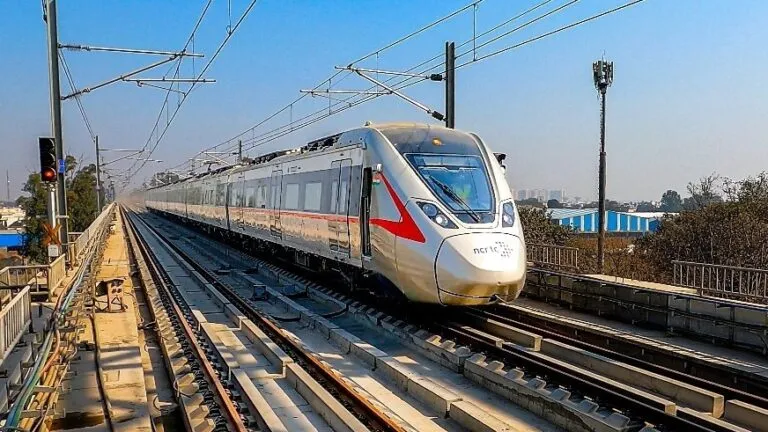
- The Speed: These trains will fly along at top speeds of 300 to 320 km/h.
- The Look: They come with aerodynamic bullet noses to slice through wind resistance, which also keeps the cabin nice and quiet.
- The Ride: Safety tech will automatically handle collision prevention, while the inside gets standard high-speed perks like extra legroom and rotating seats.
Delhi-Siliguri Bullet Train: The Route
The line will span over 1,000 kilometers and cut through four states: Delhi, Uttar Pradesh, Bihar, and West Bengal.
Starting out from a major hub in New Delhi, the line travels all the way down to the New Jalpaiguri / Siliguri junction. It skips a perfectly straight, empty route in favor of a slightly curved path that loops in major cities, ensuring maximum connectivity for regular people.
| Station | State | Role on the Route |
| New Delhi | Delhi | The starting hub in the capital. |
| Lucknow | Uttar Pradesh | Connects central UP to the fast track. |
| Varanasi | Uttar Pradesh | Brings a major tourist and spiritual hub onto the grid. |
| Patna | Bihar | Links the state capital for major passenger volume. |
| Siliguri | West Bengal | The final destination and gateway to the Northeast. |
Delhi-Siliguri Bullet Train: Current Status, Cost, and Funding
Since this project was just announced, it is currently in the early paperwork stage.
Approvals
The National High-Speed Rail Corporation Limited (NHSRCL) will be handling the Detailed Project Report (DPR). This means they need to map out the ground using drones, figure out the exact path, and see how it affects local environments. The initial central government nod is there, but getting specific state clearances will take time as the map gets finalized.
The Budget
Getting an elevated line off the ground over this kind of distance is going to cost a fortune – early estimates are already pushing past Rs 1.5 lakh crore, with the final amount pending detailed surveys. The funding will likely be patched together using central railway budgets, state-level investments, and low-rate international development loans.
Delhi-Siliguri Bullet Train: Construction Steps and When It Will Open
Building an elevated rail line through heavily populated parts of UP and Bihar is going to take a lot of coordination. The work will be split into a few clear phases:
Phase 1: Land surveys and buying up the right-of-way land parcels.
Phase 2: Building the elevated concrete pillars and bridges so the bullet train never crosses regular roads or local train tracks.
Phase 3: Laying down the specialized tracks and installing the overhead power lines.
Phase 4: Running empty test trains for months to double-check the safety systems.
The Timeline: Because engineers are already learning from the mistakes and delays on the Mumbai-Ahmedabad line, this project should move a bit more smoothly. Ground construction will only start after the DPR is fully approved, pointing to a realistic completion date somewhere in the mid-2030s.
Delhi-Siliguri Bullet Train: How This Affects the Property Market
Big infrastructure projects always cause a stir in real estate, and this line will likely shift property values near its main stations.
The Delhi Impact
In the capital, location is everything. A new bullet train terminal means the areas right around it will get a lot of attention from business travelers and commercial developers. If you are looking at standard flats in Delhi, buying something near these future transit hubs could mean better rental demand down the line as accessibility improves.
Growth in UP and Bihar
The biggest shift will hit intermediate stops like Lucknow, Varanasi, and Patna. Reducing the commute to Delhi to a mere couple of hours turns these cities into highly accessible hubs, saving local business folks from the hassle of airport lines or overnight rail journeys. It is pretty much a given that we will see a lot of new residential neighborhoods being built around these station zones.