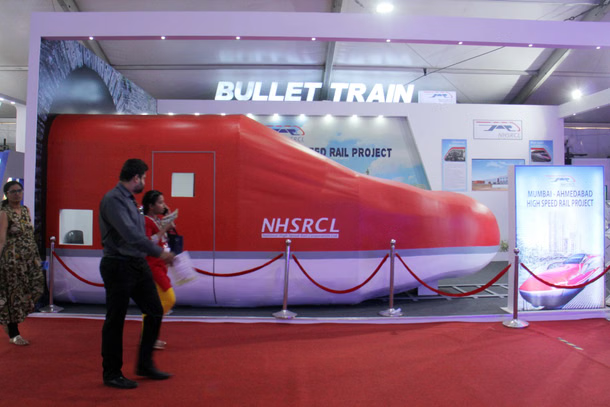
The union government is examining the possibility of introducing a public–private partnership (PPP) framework to develop India’s next generation of high-speed rail (HSR) corridors, as it seeks to mobilise private investment and reduce the financial burden on the exchequer, The Business Standard has reported.
Seven new bullet train routes, announced in the Union Budget in February by Finance Minister Nirmala Sitharaman, are estimated to require an investment of roughly Rs 16 trillion.
The proposed corridors, spanning about 4,000 km, include Mumbai–Pune, Pune–Hyderabad, Hyderabad–Bengaluru, Hyderabad–Chennai, Chennai–Bengaluru, Delhi–Varanasi and Varanasi–Siliguri.
Officials familiar with internal discussions said the idea of exploring a PPP structure was first raised at a high-level government meeting in December, ahead of the Budget announcement.
The aim is to identify a viable model that can attract private participation in constructing and operating high-speed rail systems.
“Yes, we are looking at that option actively. It is a challenge, as there are very few global precedents of successful projects in HSR. But it is a need and it is important that we keep exploring ways in which this can be done,” a top Ministry of Railways official was quoted as saying by Business Standard.